Choosing the right carton flow system can reshape how a warehouse receives, stores, and picks everyday inventory. Carton Flow Storage uses inclined rollers or wheels to move cartons toward the picking face. A worker removes the front carton, while the next carton advances into position. This simple motion can reduce reaching, walking, and replenishment delays.
This guide examines seven practical Carton Flow Storage systems for modern warehouses. It considers rack-mounted designs, modular shelving, gravity lanes, mobile units, and higher-density configurations. Each option suits different carton sizes, order volumes, aisle widths, and handling methods. For example, a small parts warehouse may benefit from adjustable roller tracks. A busy fulfillment area may need reinforced lanes, clear labels, and dedicated replenishment access.
Details matter.
During system selection, measure the carton’s weight, base dimensions, and surface friction. Test the lane with real cartons, not only supplier samples. A carton that moves well when empty may stop halfway when filled. That small issue can create repeated picking interruptions.
There is no universal winner. Some systems improve density but reduce flexibility. Others support faster access but require more floor space. Even experienced teams can overlook replenishment traffic or future product changes. Therefore, this comparison focuses on usable evidence, installation considerations, maintenance needs, and operator safety. The recommendations are practical, but they should still be checked against site measurements and workflow data before purchase.
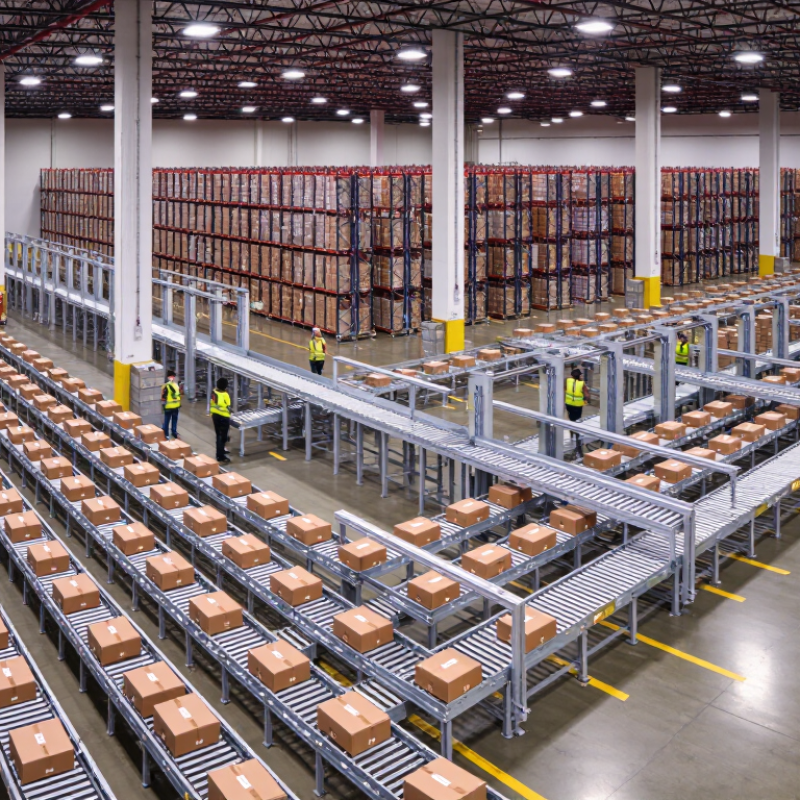
Carton flow storage systems use inclined roller tracks to move cartons from the replenishment side toward the picking face. Gravity does the work. When an operator removes the front carton, the next carton advances automatically. This supports first-in, first-out rotation and reduces walking between storage locations.
Modern warehouses commonly use seven practical formats: single-lane flow racks, multi-lane shelving, high-density carton flow racks, pallet-supported flow racks, mobile flow modules, pick-to-light flow lanes, and refrigerated flow systems. Each format suits different carton sizes, order volumes, and temperature requirements.
Adjustable dividers keep products aligned, while stop bars prevent cartons from rolling too far. Small details matter.
The 2024 MHI Annual Industry Report found that 55% of supply chain professionals planned to increase technology investment. Carton flow is not fully automated, but it improves movement without requiring complex controls. It can also reduce replenishment errors when labels face the operator. However, poor carton sizing creates gaps, jams, and wasted space. This is where practical testing matters. A warehouse should measure carton dimensions, daily picks, replenishment frequency, and worker reach before installation. The 2023 Occupational Safety and Health Administration warehousing guidance also emphasizes clear aisles, stable loads, and safe material handling. Flow lanes need regular inspection. Rollers wear. Dividers shift. Small failures become slowdowns.
Carton flow systems support fast, front-facing picking for cartons, totes, and small cases. The seven leading designs differ in lane control and replenishment speed.
Skate-wheel gravity lanes suit lightweight cartons with smooth bases. Full-roller gravity lanes handle heavier cases and maintain steadier movement. Wheel-track modules offer flexible lane widths, but they may need frequent adjustment.
Flow-through, two-sided lanes support FIFO rotation when operators replenish from the rear. Multi-depth lanes increase storage density, although deeper lanes can slow access to less popular items.
Powered live-roller lanes improve movement for heavier cartons and high-volume operations. Pick-to-light flow cells add visual guidance, reducing search time, but they require controls, wiring, and disciplined maintenance.
The seventh design combines carton flow with adjustable dividers and ergonomic pick faces. It works well for mixed SKU profiles. In practical slotting reviews, lane width should follow carton dimensions, not only pallet counts. A narrow lane may look efficient. Not always.
MHI’s 2024 Annual Industry Report reported that 55% of supply chain leaders planned higher technology investment. WERC’s 2024 DC Measures Report cited a median order-picking accuracy of about 99.5%.
These figures support better process control, but they do not guarantee performance. Dust, damaged cartons, poor replenishment, and incorrect SKU placement still create failures. The comparison is not perfectly clean; actual results depend on carton weight, demand frequency, aisle design, and operator habits.
7 Best Carton Flow Storage Systems for Warehouses
Carton flow storage improves picking speed by presenting products at the operator’s hand. The right design depends on carton weight, SKU variety, replenishment habits, and available space. Gravity roller flow uses durable rollers for smooth carton movement and reliable FIFO picking. It suits heavier cartons, but poor leveling can cause jams. Skate-wheel flow is lighter and often cheaper for small cartons. However, irregular carton bottoms may stop movement. Standard carton flow shelving offers flexible lanes for fast-moving items and simple manual replenishment. It uses more floor space than deeper systems.
FIFO flow rack separates loading and picking sides, reducing product aging and misplaced stock. Its limitation is clear: rear access is required. High-density deep-lane flow rack stores more cartons in fewer aisles. Yet, deep lanes can slow access to low-volume products. Pick-to-light flow rack adds illuminated picking guidance, which can reduce search time and errors. The controls require training, maintenance, and dependable power. It looks simple. It is not always simple.
Mobile carton flow rack moves storage units together, creating a temporary access aisle. This design saves floor space, but movement can delay urgent picks. Hybrid flow rack combines carton lanes with pallet storage above or behind them. It supports mixed inventory, though structural planning becomes more demanding. In practical warehouse reviews, lane pitch and carton dimensions often matter more than impressive capacity figures. I have seen teams choose dense storage, then lose time correcting awkward replenishment paths. The better decision may be less elegant: test real cartons, observe peak-hour picking, and accept some unused space.
| Storage System | How It Works | Best Suited For | Key Benefits | Main Limitations | Typical Operating Characteristics | Relative Investment |
|---|---|---|---|---|---|---|
| Gravity Roller Carton Flow Rack | Cartons are loaded from the replenishment side and move forward on slightly inclined rollers under gravity. | High-volume piece picking with a first-in, first-out (FIFO) requirement. |
|
|
Best rotation: FIFO Access: Direct front access Automation potential: Medium |
Medium–High |
| Wheel-Bed Carton Flow Rack | Cartons travel over closely spaced wheels mounted in flow lanes, usually on an inclined frame. | Light to medium cartons and fast-moving order-picking operations. |
|
|
Best rotation: FIFO Access: Direct front access Automation potential: Medium |
Medium |
| Carton Flow Shelving | Compact flow lanes are integrated into shelving bays, commonly using rollers or wheels to feed cartons toward the operator. | Small-item picking, parts storage, and operations with many SKUs and modest carton weights. |
|
|
Best rotation: FIFO Access: Single-sided or double-sided Automation potential: Medium–High |
Low–Medium |
| Push-Back Carton Flow System | Cartons are loaded from the front and push previously stored cartons backward along inclined rails or carts. | High-density storage where last-in, first-out (LIFO) access is acceptable. |
|
|
Best rotation: LIFO Access: Single-aisle access Automation potential: Medium |
Medium–High |
| Static Shelving with Gravity Inserts | Existing shelving is fitted with small rollers, wheels, or inclined inserts to convert fixed shelves into flow lanes. | Retrofit projects, low-to-medium throughput, and facilities with an existing shelving structure. |
|
|
Best rotation: FIFO when loaded correctly Access: Direct front access Automation potential: Low–Medium |
Low–Medium |
| Motorized Carton Flow Rack | Powered conveyors, belts, or motorized rollers advance cartons through storage or picking lanes. | High-throughput distribution centers with predictable order profiles and frequent picking. |
|
|
Best rotation: FIFO or controlled sequence Access: Engineered access points Automation potential: High |
High |
| Dynamic Carton Flow with Pick-to-Light | Carton flow lanes are combined with electronic location indicators that direct operators to the required SKU and quantity. | Piece-picking operations where speed, accuracy, and real-time work instructions are priorities. |
|
|
Best rotation: FIFO or system-directed Access: Dedicated pick face Automation potential: High |
High |
Choosing the right carton flow system starts with the product, not the catalog. Measure carton width, depth, weight, and daily handling volume. Small differences can affect lane performance.
Watch the cartons move. Do they roll smoothly, stop safely, and present labels at a comfortable height? A practical trial with real inventory often reveals more than a specification sheet. Sloped lanes suit fast-picking areas, while adjustable tracks support changing carton sizes. Heavy cartons may need stronger rollers and controlled speed. Fragile packages need gentle movement. Simple details matter.
Assess the full workstation, not only the rack. Check aisle width, replenishment access, lighting, and the picker’s reach distance. A well-designed lane can reduce walking and improve stock rotation. However, excessive slope may cause cartons to collide or damage packaging. That mistake is easy to overlook. Leave room for inspection and maintenance. Dust, bent rails, and worn rollers can quietly reduce performance. Record pick rates, replenishment time, and handling errors during a short pilot. Compare the results with your actual workload. The cheapest option may create higher labor costs later. The largest system may waste valuable floor space. Operators should also test the layout during busy periods, because a quiet trial can hide congestion. Reconsider the design when carton sizes change; flexibility is useful, but too much adjustment can slow daily work.
Carton flow storage systems improve picking speed when installation matches the warehouse’s real working conditions. Before assembly, measure aisle widths, floor levels, carton sizes, and replenishment routes. Check every frame, roller, divider, and anchor against the approved layout. A level floor matters. Even a small slope can make cartons accelerate unexpectedly. During installation, leave enough clearance for hands, equipment, and emergency access. I have seen teams rush this stage and correct misaligned lanes later. That wasted time was avoidable.
Safety depends on disciplined daily use. Train workers to load cartons from the replenishment side and pick from the designated face. Keep heavier cartons lower whenever the design permits. Do not exceed posted load limits. Damaged rollers, bent frames, or missing stops require immediate isolation and inspection. Clear labels help, but labels alone cannot prevent poor habits. Operators should report unusual movement, noise, or unstable cartons before the problem grows.
Tips: Use a commissioning checklist and test each lane with real carton weights. Inspect rollers, brackets, guides, and anchors weekly at first. Record defects with photos and dates. Clean dust and packaging scraps from tracks regularly. Review the schedule after seasonal demand changes; maintenance intervals may need adjustment. One overlooked detail remains important: replacement parts must match the system’s dimensions and load requirements, not merely look similar.
Inclined rollers move cartons from the replenishment side toward the picking face. Gravity moves them.
It reduces walking and presents products near the operator’s hands.
Gravity roller lanes usually suit heavier cartons and smooth carton movement.
No. Skate-wheel lanes often suit lighter, smaller cartons.
Deep lanes store more cartons while using fewer aisles.
Mobile units can move together and create a temporary access aisle.
Measure carton width, depth, weight, daily picks, and replenishment frequency.
Run a short pilot using actual cartons and normal operators.
Inspect rollers, dividers, stop bars, rails, and lane surfaces regularly.
Excessive slope can make cartons collide, roll too quickly, or damage packaging.
Carton Flow Storage systems are designed to improve the movement, organization, and accessibility of cartonized goods in modern warehouses. Using gravity-fed lanes, rollers, or wheels, these systems typically support first-in, first-out inventory rotation while reducing unnecessary walking and replenishment time. This summary compares seven common design approaches, including standard roller lanes, wheel-based tracks, adjustable shelving, high-density configurations, and modular systems. Each option offers different advantages in capacity, flexibility, picking speed, and cost, while limitations may include load restrictions, space requirements, or more frequent maintenance.
Selecting the right Carton Flow Storage solution depends on product dimensions, carton weight, order volume, inventory turnover, available floor space, and workflow requirements. The article also highlights essential installation, safety, and maintenance practices, such as proper lane alignment, secure anchoring, load-rated components, regular inspections, and clear operator access. With careful planning and ongoing upkeep, a suitable system can improve picking efficiency, support safer warehouse operations, and make better use of available storage space.

Kimsuk Storage