China Best Narrow Aisle Storage Manufacturers?

Time:2026-09-26 Author:Liam
0%

China’s Narrow Aisle Storage market is expanding as warehouses pursue higher density, faster picking, and measurable space savings. However, “best” cannot mean the lowest quoted price. It should mean dependable engineering, verified load ratings, consistent production, and responsive service.

The 2024 MHI Annual Industry Report identifies labor pressure, customer expectations, and technology investment as major supply-chain priorities. Its findings support a practical point: storage equipment must improve productivity without creating unsafe or complicated workflows. Research from Interact Analysis also indicates continued growth in warehouse automation, although market figures vary by region, product category, and reporting method. That uncertainty deserves attention. A catalog number alone proves little.

James A. Tompkins, a recognized warehouse and supply-chain authority, said, “The warehouse is the heart of the supply chain.” His statement remains relevant to Narrow Aisle Storage selection. A rack system may look efficient on paper, yet poor aisle tolerances can slow forklifts, damage pallets, and increase training demands. Small details matter. Beam deflection. Upright protection. Floor flatness. After-sales response.

This guide examines Chinese manufacturers through those operational lenses. It considers design capability, steel quality, customization, certifications, installation support, and export experience. Site conditions will still decide the final result. A supplier that performs well in one warehouse may fail in another. Readers should compare drawings, testing records, references, and total lifecycle costs before choosing a partner. That is less dramatic than a simple ranking, but probably more useful.
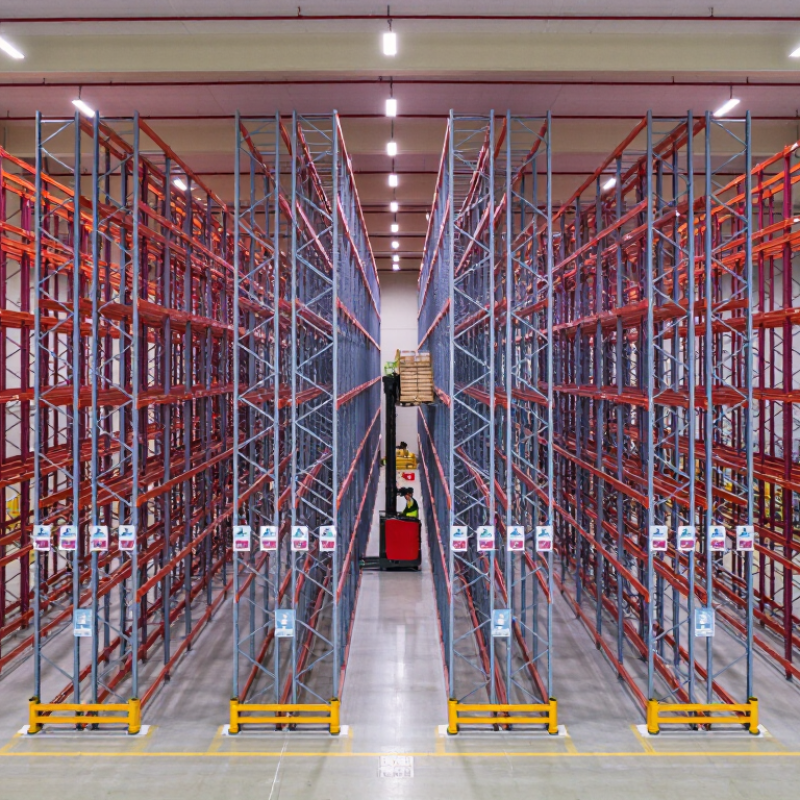
China Best Narrow Aisle Storage Manufacturers?

Narrow Aisle Storage Systems: Definition and Core Features

Narrow aisle storage systems are warehouse layouts that reduce the space between pallet racks, allowing more storage positions within the same building footprint. They typically use specialized trucks, such as guided reach or turret trucks, to handle loads where ordinary forklifts may not turn comfortably. The exact aisle width depends on the truck, pallet size, load overhang, and required operating clearance. Small details matter.

Core features include tall rack structures, carefully planned travel paths, and equipment matched to rack height and load weight. Some operations use floor rails or wire guidance to help trucks stay aligned; others rely on different guidance methods. Operators need clear sightlines and consistent pallet placement, especially when retrieving goods several levels above the floor. A crooked pallet can slow a whole aisle.

The main benefit is improved storage density, not automatically faster work. Narrower aisles can limit passing and make replenishment planning more demanding. That trade-off is easy to underestimate. Before changing a layout, teams should review daily pallet movements, floor condition, fire protection, and emergency access with qualified warehouse and equipment professionals. Measurements from the actual site are more useful than a generic aisle-width estimate, though even careful plans may need adjustment after real operating trials.

Key Factors for Evaluating China’s Narrow Aisle Storage Manufacturers

China Best Narrow Aisle Storage Manufacturers?

Key Factors for Evaluating China’s Narrow Aisle Storage Manufacturers

Choosing a narrow aisle storage manufacturer in China starts with the actual warehouse, not a catalogue image. Share aisle widths, load weights, forklift dimensions, and ceiling height. Ask how the proposed layout handles turning space, floor flatness, and sprinkler clearance. Request drawings that show beam levels, upright spacing, and connection details. Then check whether the supplier has completed projects with similar loads and operating conditions. A polished brochure is not evidence. References and inspection records are more useful.

Good suppliers explain design limits in plain language and flag assumptions before production. They should describe quality checks for welding, coating, and finished dimensions, while providing records where available. Discuss installation supervision and staff training, too; a sound design can still be assembled incorrectly. Small details matter. Even a thorough review can miss site-specific issues, so have a qualified local professional verify the final layout before ordering. Look for clear answers, realistic timelines, and willingness to revise drawings when measurements change.

Major Narrow Aisle Storage Solutions Offered by Chinese Manufacturers

Chinese manufacturers offer several narrow-aisle storage options, from selective pallet racks to very-narrow-aisle systems served by guided trucks. Selective racks suit mixed stock and frequent picking. VNA layouts place taller racks close together, but require compatible handling equipment and carefully planned floor conditions. Small details matter: upright protection, beam locks, clear aisle markings, and enough turning space at the aisle ends.

Mobile pallet racking moves rack rows to open a working aisle only where needed. Drive-in racks and pallet-shuttle systems can increase storage density for larger batches, though they reduce direct access to every pallet. Mezzanine platforms add usable levels for cartons or light assembly, subject to structural review. The 2024 MHI Annual Industry Report found that 55% of surveyed supply-chain professionals planned to increase technology investment. That figure signals interest in modernization; it does not prove that any one storage system will improve a specific warehouse. Measure the site first. Compare storage capacity, picking speed, equipment costs, and maintenance needs using the same assumptions. A layout can look efficient on paper and still create congestion at shift changes. That trade-off deserves attention.

Manufacturing Standards, Customization, and Quality Control

Narrow-aisle storage systems leave little room for manufacturing errors. A sound supplier documents steel grades, weld procedures, coating thickness, and load-test results. Buyers should ask for traceable inspection records, not just a general quality certificate. Under ANSI MH16.1, rack design, testing, and use are addressed through defined engineering requirements. The standard is a useful reference, but site conditions still matter. Floor flatness, seismic conditions, and forklift clearances can change the design.

Quality control should follow each component from incoming inspection to final assembly. Check upright dimensions, beam-lock engagement, weld consistency, and coating coverage. Small defects can become costly when aisles are tight. MHI’s 2024 Annual Industry Report found that 55% of surveyed organizations planned to increase supply-chain technology investment. This broad industry finding does not measure rack quality directly. It does show why manufacturers increasingly use digital records to track production and inspection.

Customization should start with measured operating needs: pallet size, lift-truck turning radius, ceiling height, and expected load. A detailed drawing helps catch conflicts before fabrication. One point is often overlooked: “custom” does not automatically mean safer or better. Ask how design changes are reviewed, tested, and recorded. Even careful checklists can miss a site-specific constraint. That deserves a second look.

How to Select the Right Chinese Narrow Aisle Storage Manufacturer

Choosing a Chinese narrow aisle storage manufacturer starts with your building, not a catalog. Share clear aisle measurements, rack heights, pallet sizes, and the forklift model. Ask the supplier to check turning clearance and beam levels against a layout drawing. Small details matter.

Request load calculations, material specifications, finish options, and inspection records for the proposed system. Compare these documents with your actual pallet weights and expected storage changes. Ask how the manufacturer checks welds, upright dimensions, and surface coating. A low quote means little if the specifications differ.

Assess communication and delivery planning, too. Confirm who will review drawings, answer technical questions, and coordinate installation support. Request references for projects with similar aisle widths and operating conditions. Check whether replacement parts and clear maintenance instructions will be available after delivery. I would still ask for a revised drawing when site measurements are uncertain; estimates can miss columns, uneven floors, or sprinkler clearance. A careful supplier should explain assumptions and flag unresolved details before production begins.

China Best Narrow Aisle Storage Manufacturers? How to Select the Right Manufacturer

Typical clear aisle width varies by material-handling equipment. Use these indicative planning ranges to assess whether a manufacturer’s storage design fits your warehouse and equipment.

Indicative industry ranges: actual aisle requirements depend on the truck model, load dimensions, rack layout, and operating clearances. Ask manufacturers to validate the design against your specific equipment and site measurements.

FAQS

What information should I share before requesting a narrow-aisle layout?

Provide aisle widths, pallet sizes, load weights, forklift dimensions, and ceiling height. Measure the building carefully.

Which documents should I request from a manufacturer?

Ask for layout drawings, load calculations, material specifications, installation instructions, and a written warranty. Request inspection records when available.

How can I check whether a proposed layout fits my warehouse?

Review turning space, floor flatness, sprinkler clearance, and aisle-end access. Columns can be easy to overlook.

Which storage systems work for different warehouse needs?

Selective racks support mixed stock and frequent picking. Drive-in racks and pallet-shuttle systems may suit larger batches, but offer less direct access to each pallet.

What should I know about very-narrow-aisle systems?

They use closely spaced, taller racks and need compatible handling equipment. Floor conditions and aisle-end turning space matter.

Can mobile racking or a mezzanine improve storage capacity?

Mobile racking opens an aisle where needed. A mezzanine adds usable levels, but requires structural review. More capacity is not always easier to manage.

How do I compare supplier quotes fairly?

Compare complete proposals using the same loads, materials, finishes, and installation assumptions. A low price may reflect different specifications.

What should I check about quality and support?

Ask how welds, coatings, and finished dimensions are inspected. Confirm installation supervision, staff training, replacement parts, and maintenance instructions.

What if site measurements are uncertain?

Request revised drawings before production. Estimates can miss uneven floors or sprinkler clearance, and even a careful review may miss something.

Conclusion

Narrow Aisle Storage systems are designed to make better use of warehouse space by reducing aisle width while maintaining efficient access to stored goods. Choosing a suitable system involves evaluating a manufacturer’s engineering experience, production capacity, material quality, safety features, and ability to support different warehouse layouts. Chinese manufacturers may offer options such as narrow-aisle pallet racking, guided truck systems, and customized configurations for varying storage needs.

Reliable production standards, careful quality control, and clear customization processes are important when comparing suppliers. Buyers should confirm that designs match their building dimensions, handling equipment, load requirements, and day-to-day operations. They should also assess communication, technical support, delivery planning, and after-sales service. By comparing these factors rather than price alone, businesses can select a Chinese Narrow Aisle Storage manufacturer whose solutions fit their operational goals and support efficient, dependable warehouse use.

Liam

Liam

Liam is a dedicated marketing professional with a profound expertise in the industry, where he excels at highlighting the unique advantages of our core products. With a keen understanding of market trends and consumer needs, Liam frequently updates our company’s professional blog, providing......