Choosing the right Stacking Systems can shape warehouse speed, safety, storage capacity, and long-term operating costs. A system that looks efficient in a brochure may struggle under real pressure. Product weight, pallet dimensions, aisle width, ceiling height, and daily movement patterns all matter. So does the human factor. Operators need clear sightlines, simple controls, and reliable access during busy shifts.
Martin Christopher, a respected logistics professor and supply chain author, said, “Supply chains compete, not companies.” His point applies directly here. A stacking solution should support the entire flow, from receiving and put-away to picking and dispatch. Businesses should compare pallet racking, mobile systems, automated storage, and floor stacking against measurable needs. Consider throughput, fire protection, maintenance access, training, and future expansion. Small details matter. A blocked aisle can erase theoretical gains.
Experience often reveals what specifications miss. Watch how workers move around the facility at 8 a.m., not only during a quiet demonstration. Check whether forklifts can turn safely near loading doors. Ask suppliers for service records, installation timelines, and references from similar operations. Reliability deserves equal attention.
There is no perfect system.
A growing business may choose flexible modular equipment, while a high-volume site may justify automation. Still, cost should not become the only measure. We may underestimate changeover time, floor loading, or staff acceptance. That is where careful testing helps. The following guide explains how to assess Stacking Systems with practical evidence, realistic constraints, and a clear view of future demand.
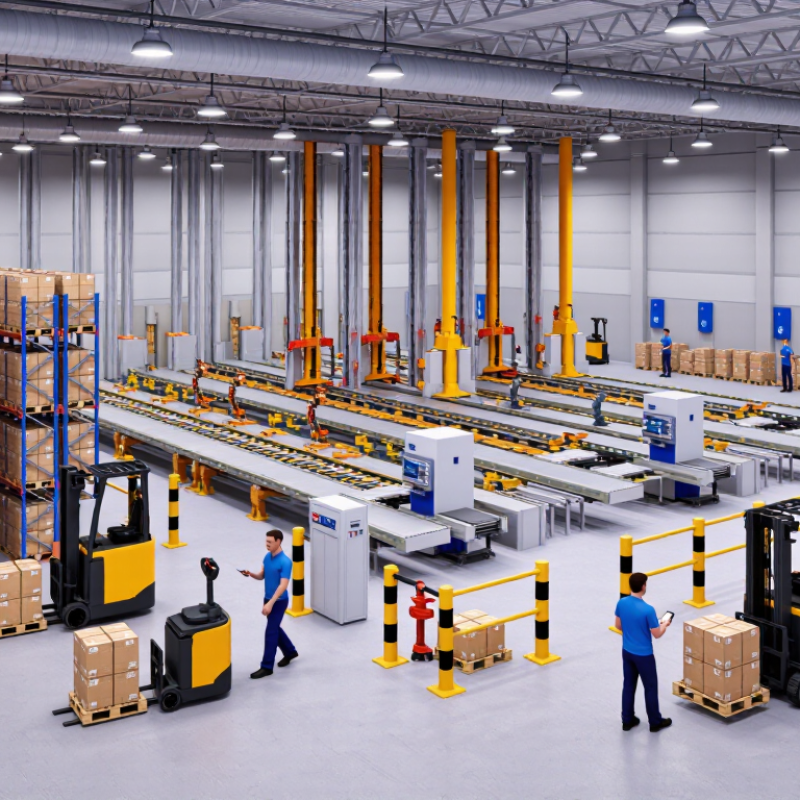
Choosing a stacking system starts with a clear definition of business needs. Measure daily pallet volume, product weight, package dimensions, aisle space, and retrieval frequency. Do not begin with equipment catalogs. Begin with the warehouse floor. A fast-moving item may need direct access, while reserve stock can tolerate denser storage. Write these differences down.
Your objectives should be measurable. Examples include increasing pallet positions by 20%, reducing travel distance by 15%, or keeping retrieval time below three minutes. Safety must remain a primary target. The International Labour Organization estimates that nearly three million workers die annually from work-related incidents and diseases. Stable loads, visible aisles, guarded edges, and verified load ratings deserve specific targets, not general promises.
Automation may support these goals, but it should not define them. The International Federation of Robotics reported 4.28 million industrial robots operating worldwide in 2023, a 10% increase from the previous year. That growth shows strong adoption, not universal suitability. A manual or semi-automated system may perform better in a small warehouse with irregular inventory. It may also be easier to repair. This is often overlooked. Review seasonal peaks, labor skills, floor conditions, and future product changes before selecting a design. A spreadsheet can expose weaknesses, but a timed floor trial reveals them. Some assumptions will be wrong. That is useful.
Choosing a stacking system starts with the product, not the warehouse photo. Floor stacking is inexpensive and flexible for stable, uniform loads. It works well when pallets move quickly and operators can manage clear lanes. Yet every extra layer increases handling risk and inspection time. Block stacking uses space efficiently, but workers may need to move front pallets before reaching rear stock. That delay matters for mixed inventory or strict first-in, first-out rotation. Keep aisles visible.
Drive-in stacking systems place pallets on supported rails, reducing aisle space and increasing storage density. They suit large batches of similar goods, especially when turnover is predictable. Access remains limited, and rail damage can create serious maintenance concerns. Push-back systems allow several pallets per lane and provide better selectivity than drive-in layouts. They can improve labor flow, although moving carts require regular checks and accurate loading. Small errors become expensive.
Pallet-flow systems use rollers to move loads toward the picking face. They are valuable for high-volume operations that depend on first-in, first-out control. Installation costs and pallet compatibility need careful review. Cantilever systems are better for long materials such as pipes, timber, or metal sections. They need balanced arms, protected posts, and stable floor anchoring. I would test one representative lane before converting an entire facility. Real warehouse behavior often differs from the plan.
Choosing a stacking system should begin with real operating conditions, not catalogue appearance. Measure pallet dimensions, load weight, ceiling height, aisle width, and daily movement. A system that holds more pallets may still slow retrieval. Leave enough clearance for turning equipment safely. Small errors here become expensive delays later.
Capacity must include both maximum load and regular working load. Ask a qualified engineer to verify frame strength, floor loading, and anchoring requirements. Safety also depends on visible load labels, impact protection, stable pallets, and scheduled inspections. In practice, damaged beams are sometimes overlooked during busy shifts. That is a serious weakness. Local workplace rules and equipment guidance should shape the final design.
Tips: Test the layout with empty pallets first. Mark pedestrian routes clearly. Record inspection dates. Compare average retrieval time before and after installation. If workers frequently reposition pallets by hand, the layout may need revision. Do not measure efficiency by storage density alone. Energy use, training time, maintenance access, and recovery after a damaged component matter too. A pilot area can reveal problems that drawings miss. I once assumed a narrow aisle would improve capacity, but turning delays reduced output. That experience reinforced one point: practical observation should challenge theoretical efficiency.
| Stacking System | Typical Storage Capacity | Space Utilization | Access Selectivity | Typical Load Configuration | Safety Considerations | Operational Efficiency | Best-Fit Applications |
|---|---|---|---|---|---|---|---|
| Selective Pallet Racking | Usually 2–5 pallet positions high; approximately 1,000–3,000 kg per pallet position, subject to design. | Moderate; commonly uses approximately 35%–45% of the available floor area for storage after aisles and access zones are included. | Very high; every pallet position can normally be accessed directly. | Standard pallets with varied stock-keeping units and frequent replenishment. | Requires anchored frames, beam locking pins, load plaques, rack protection, and regular inspections. | Very high | Warehouses with many product types, high order frequency, and a strong need for stock visibility. |
| Drive-In Racking | Commonly 3–6 pallet positions deep and up to approximately 5–8 levels high, depending on building height and equipment. | High; often provides approximately 60%–80% more pallet density than selective racking in suitable layouts. | Low; access is mainly from the loading face, with limited direct access to individual pallets. | Large quantities of the same product, usually managed on a last-in, first-out basis. | Requires trained forklift operators, controlled entry speed, guide rails, upright protection, and strict load-placement procedures. | Medium | Cold storage, seasonal inventory, and operations holding long production runs of homogeneous products. |
| Double-Deep Racking | Usually 2 pallet positions deep and approximately 3–6 levels high; capacity depends on aisle width and lift-truck reach. | High; generally increases pallet density by about 25%–35% compared with single-deep selective layouts. | Medium; front pallets must normally be moved to reach rear pallets. | Medium-volume inventory with several pallets per stock-keeping unit. | Needs reach-truck-compatible design, adequate aisle clearance, load stops, rack protection, and inventory controls. | High | Distribution centers seeking a balance between density and reasonable product accessibility. |
| Push-Back Racking | Typically 2–5 pallets deep and approximately 3–6 levels high, depending on the system design. | High; commonly delivers approximately 50%–75% more storage density than selective racking. | Medium; each lane generally stores one product line, with rear pallets retrieved after front pallets. | Multiple pallets of the same product with last-in, first-out inventory rotation. | Requires correctly matched carts or rollers, pallet compatibility checks, end stops, and controlled loading and unloading. | High | Products stored in batches where high density is more important than first-in, first-out rotation. |
| Pallet Flow Racking | Often 2–8 pallets deep and approximately 3–6 levels high, depending on load weight and conveyor design. | High; uses deep lanes while reducing the number of replenishment and picking aisles. | High for first-in, first-out control; loading and picking are performed from opposite sides. | Uniform pallets with consistent dimensions and relatively high inventory turnover. | Needs speed controllers, pallet separators, back stops, lane inspections, and compatibility between pallets and rollers. | Very high | Food, beverage, pharmaceutical, and other operations requiring FIFO rotation and rapid case or pallet picking. |
| Mobile Pallet Racking | Usually 4–8 pallet levels high, with storage capacity close to the building’s structural and fire-safety limits. | Very high; can reduce fixed aisle requirements and increase storage capacity by approximately 80%–120% over comparable selective layouts. | High when the required aisle is opened; access is sequential because only selected aisles are available at one time. | High-value, slow-moving, or space-intensive palletized inventory. | Requires floor-load verification, interlocked movement controls, emergency release systems, presence sensors, and anti-crush protection. | Medium to high | Facilities with expensive floor space, moderate access frequency, and a need to maximize pallet capacity. |
| Cantilever Racking | Typically 2–6 storage levels; arm capacity commonly ranges from approximately 250–1,500 kg per arm pair, subject to engineering. | Moderate to high for long products because columns and arms reduce obstruction across the storage face. | High; products can generally be accessed from the front without rack beams blocking the load. | Long, bulky, or irregular items such as pipes, timber, panels, and metal sections. | Requires engineered column and arm ratings, end stops, balanced loading, aisle protection, and controls against uneven weight distribution. | High | Manufacturing, construction supply, lumber, metal, and building-material storage operations. |
Choosing the best stacking system starts with compatibility, not attractive features. Map existing software, data formats, authentication methods, and reporting workflows before testing new tools. In pilot projects, I have seen small integration gaps create hours of manual reconciliation each week. Test real records, not polished demonstrations. That matters.
Scalability deserves measurable checks. Flexera’s 2024 State of the Cloud Report found that 89% of surveyed organizations use a multi-cloud strategy. This signals a practical need for systems that exchange data across changing environments. Ask how the system handles higher transaction volumes, additional users, and new locations. Measure response times at two or three times today’s workload. More capacity is not always better. Poorly designed complexity can raise costs.
Maintenance is often underestimated. The Uptime Institute’s 2024 Global Data Center Survey reported that power issues remained a leading cause of significant outages. Your stacking system should support monitoring, backup routines, access controls, and clear recovery procedures. Review update frequency, support response targets, and the skills required for daily administration. A system that needs one specialist may become fragile after staff turnover. I would also document the less obvious work, such as connector testing and permission reviews. These tasks are easy to overlook. They are not free.
Choosing a stacking system requires more than comparing purchase prices. The cheapest option may create higher costs through repairs, limited capacity, or slow handling. Measure your available floor area, ceiling height, pallet dimensions, and daily movement before requesting quotations. In warehouse assessments, I have seen unused vertical space become a costly mistake.
Long-term value depends on durability and flexibility. A strong system should support your current load safely and adapt to future inventory changes. Check steel quality, load ratings, installation requirements, inspection access, and replacement-part availability. Ask suppliers for maintenance schedules and realistic service-life estimates. A system that reduces damaged goods can repay its higher initial cost over time.
Do the full calculation.
Include labor, energy, floor preparation, inspections, and downtime. For example, a system that saves eight minutes per pallet may lower labor costs every day. However, projected savings are not guaranteed. Work patterns can change, and staff may need training. I once underestimated aisle congestion during peak months; the design looked efficient on paper but slowed picking in practice. Test a small section first, record actual handling times, and revise the layout before committing to a large installation. Reliable decisions come from measured performance, not attractive estimates.
Select the best system based on cost and long-term value.
Estimated lifecycle cost per pallet position over 10 years. Static pallet racking generally offers the lowest initial investment, while mobile and automated systems can provide higher storage density and labor savings. Actual costs vary by facility size, load requirements, installation conditions, energy use, and labor rates.
Floor stacking suits stable, uniform loads with quick movement. It needs clear lanes. Each added layer increases handling risk and inspection time.
Block stacking uses floor space efficiently but limits access to rear pallets. Workers may move front pallets first. This can delay mixed inventory handling and weaken first-in, first-out control.
Drive-in systems suit large batches of similar goods with predictable turnover. Supported rails reduce aisle space and increase density. Access is limited, and damaged rails may create expensive maintenance work.
Push-back systems store several pallets in one lane. They offer better selectivity than drive-in layouts. Moving carts need regular checks, and inaccurate loading can become costly.
Pallet-flow systems suit high-volume operations needing first-in, first-out movement. Rollers move loads toward the picking face. Review installation costs and pallet compatibility carefully.
Cantilever systems suit long materials, including pipes, timber, and metal sections. Arms must remain balanced. Posts need protection, and floor anchoring must stay stable.
Compare more than the purchase price. Include labor, energy, floor preparation, inspections, repairs, and downtime. A system saving eight minutes per pallet may reduce daily labor costs.
Test one representative lane before changing the entire facility. Record handling times, congestion, loading accuracy, and pallet damage. Plans can mislead. Peak-season aisle congestion once looked minor but slowed picking badly.
Choosing the right Stacking Systems begins with a clear understanding of your business needs, storage goals, available space, workflow, and expected growth. Consider whether your operation requires fixed, mobile, automated, or modular solutions, and compare each type according to its suitability for your products and daily processes. Capacity, load stability, worker safety, accessibility, and ease of operation should all be evaluated before making a decision.
A strong system should also be compatible with existing facilities and equipment, flexible enough to support future expansion, and simple to inspect, repair, and maintain. While initial cost is important, businesses should assess long-term value by considering durability, labor efficiency, energy use, downtime, and potential productivity gains. The best choice is not necessarily the least expensive option, but the system that provides a balanced combination of safety, performance, scalability, reliability, and sustainable operating costs.

Kimsuk Storage