How to Choose the Right Drive-in Storage System

Time:2026-09-21 Author:Ethan
0%

Choosing the right Drive-in Storage system is not simply a matter of adding more pallet positions. It is a decision about product flow, forklift access, safety, and future workload. A system may look efficient on a warehouse drawing, yet perform poorly when operators face damaged pallets, mixed stock, or frequent order changes.

Gwynne Richards, a recognised warehouse management author and consultant, offers a useful principle: “The warehouse layout should support the flow of goods, not restrict it.” This idea matters when comparing Drive-in Storage with selective pallet racking, drive-through systems, or other high-density options. Drive-in Storage can make excellent use of limited floor space. It suits stable products, large quantities, and last-in, first-out inventory handling. However, it may be less suitable for operations needing rapid access to many different stock-keeping units.

Look closely at the details.

Pallet quality matters. Forklift skill matters. So does aisle width.

This guide examines the practical factors behind a reliable choice, including load dimensions, rack height, travel frequency, inventory rotation, and workplace conditions. It also considers installation quality and inspection routines, because a well-designed system can still become inefficient through poor maintenance. There is no universal answer. Even experienced planners can underestimate seasonal demand or future product changes. That uncertainty deserves attention, not a rushed promise of maximum capacity.

The goal is a balanced decision: more usable space, safer movement, and a storage process that workers can manage confidently every day.
How to Choose the Right Drive-in Storage System

Understanding Drive-in Storage Systems and Their Core Design

How to Choose the Right Drive-in Storage System

Understanding Drive-in Storage Systems and Their Core Design

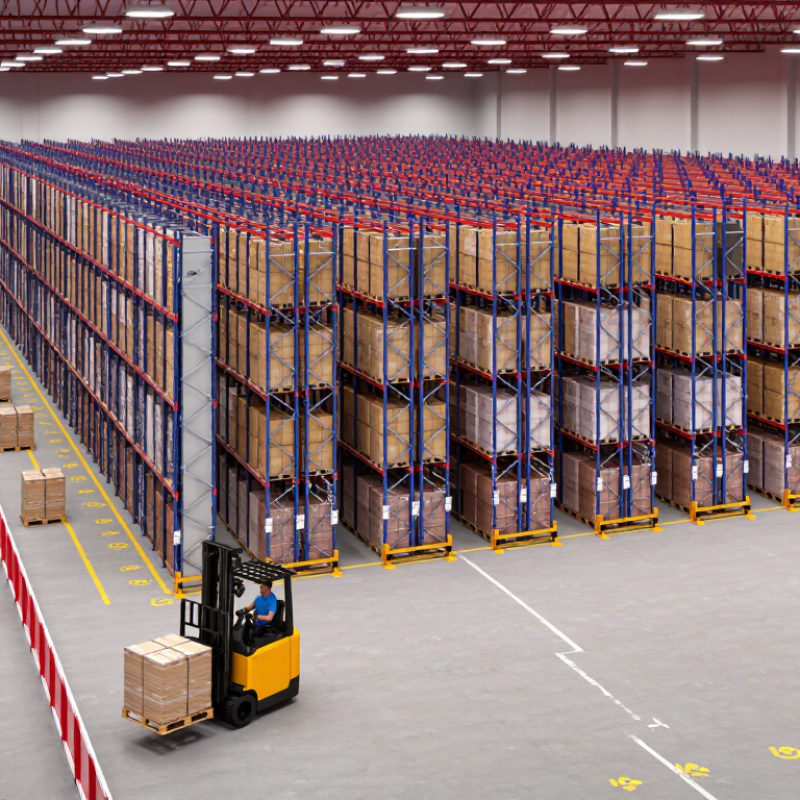
Drive-in storage is built for high-density pallet holding, not frequent individual access. Its core design uses upright frames, guide rails, entry points, and rear stops. Pallets travel deep into lanes on rails supported by the structure. This layout reduces travel aisles and increases usable floor space. It normally follows a last-in, first-out workflow. That detail matters when selecting suitable inventory. Product rotation, pallet quality, and forklift control should guide the design. A qualified storage specialist should verify load limits, beam levels, clearances, and floor capacity. A neat drawing can still fail in a busy warehouse.

Tips: Measure the actual pallet dimensions. Check pallet condition regularly. Leave enough clearance for the forklift mast and load. Avoid mixing unstable loads in one lane. Mark entry lanes clearly. These small details prevent expensive damage.

A practical assessment should examine daily movement, storage depth, and temperature conditions. Deeper lanes may improve density, but they can slow access and increase handling risk. The rail spacing must support pallets evenly without damaging boards. Uprights and bracing also need protection from forklift impact. I have seen designs chosen for maximum capacity, then adjusted because operators could not work comfortably. That is a useful warning. Efficiency is not only a space calculation. It also depends on visibility, training, inspections, and disciplined loading. Regular checks should record bent rails, damaged uprights, missing stops, and uneven pallets. Calibration is often overlooked. However, small measurement errors can create large safety problems.

Assessing Warehouse Space, Inventory, and Access Requirements

How to Choose the Right Drive-in Storage System

A drive-in storage system can increase pallet density, but it demands careful warehouse assessment. Measure the clear height, floor area, column spacing, and forklift turning radius. A small obstruction can reduce usable lanes. Check the rack depth against the available travel distance. Deep lanes suit warehouses with limited SKU variety and large pallet quantities.

Inventory behavior matters more than simple storage volume. Drive-in systems usually favor last-in, first-out access, so they work best for stable products with low rotation. Review pallet dimensions, weights, packaging strength, and loading consistency. Mixed pallet sizes may create empty space or unsafe contact points. Count active SKUs, not just total pallets. A spreadsheet may look precise, yet daily picking patterns can expose weak assumptions.

Tips: Map one busy aisle during a real shift. Note waiting forklifts, blocked pallets, and product changes. Leave enough clearance for safe handling and routine inspections. Confirm that the floor, rack design, and equipment match local safety requirements. Do not optimize every square meter. A system that stores more pallets but slows urgent access may reduce overall efficiency. That trade-off is easy to underestimate.

How to Choose the Right Drive-in Storage System

Assess warehouse space, inventory profile, and pallet access requirements before selecting a high-density storage method.

The chart compares typical pallet positions stored deep in one lane. Drive-in systems generally provide higher density than selective or double-deep racking, but they reduce direct pallet access and are usually best suited to large quantities of fewer SKUs with relatively low access frequency. Pallet-flow systems are more suitable when FIFO rotation is important. Actual capacity depends on pallet dimensions, load height, aisle layout, safety clearances, and operating equipment.

Comparing Rack Capacity, Load Limits, and Storage Configurations

Choosing a drive-in storage system starts with real load data, not aisle appearance. Record pallet weight, dimensions, height, and entry direction. Then calculate the load per bay, level, and upright frame. ANSI MH16.1 guidance requires rack design to reflect actual loading conditions, including impact and seismic factors.

Drive-in racks support high density because forklifts enter storage lanes. They suit uniform products with low SKU variety and LIFO rotation. A drive-through layout allows FIFO movement, but it needs access from both ends. Capacity often falls when pallets have uneven bases or damaged boards. That detail is easy to miss. OSHA requires stored materials to remain stable and not create hazards. The 2022 Bureau of Labor Statistics data recorded 56 fatal injuries in warehousing and storage, reinforcing the value of disciplined inspections and operator training.

Tips: Confirm the rated load on every level. Keep heavier pallets lower. Leave enough clearance for forklift mast movement. Never estimate capacity from beam length alone. Inspect rails, frames, and pallet supports weekly, and document damage immediately. MHI’s 2024 Annual Industry Report identifies warehouse automation and data visibility as major investment priorities, but automation cannot correct incorrect weight records. I have seen layouts fail because the “standard” pallet was not standard. Recheck the product mix before approving the final configuration.

Evaluating Safety Features, Equipment Compatibility, and Durability

How to Choose the Right Drive-in Storage System

Safety features should guide every drive-in storage decision.

Safety comes first. Inspect upright frames, entry guides, backstops, and rack protectors before comparing storage capacity. These components reduce collision damage and help forklifts enter lanes with better control. Confirm that the system includes clear load ratings and visible operating instructions. Workers should understand pallet placement, lane depth, and safe retrieval procedures. A small design weakness can become expensive during daily operations.

Equipment compatibility requires accurate measurements, not assumptions.

Measure twice. Check pallet dimensions, forklift turning space, mast height, and aisle width on site. The rail spacing must support the pallet type without unstable overhang. Floor conditions also matter, especially where loaded forklifts travel repeatedly. In my experience, compatibility problems often appear after installation because real equipment differs from the original drawings. A practical trial with the actual forklift can reveal clearance issues early.

Durability depends on material quality, joint design, surface protection, and maintenance access.

Look for strong welds, reinforced frames, and finishes suited to the working environment. Humidity, dust, temperature changes, and frequent impacts can shorten service life. Request inspection records and ask how damaged parts can be replaced. Do not judge durability by thickness alone. I once overlooked maintenance access during a layout review, and that decision made routine inspections slower. Reliable systems need documented inspections, trained operators, and space for safe repairs.

Selecting the Best System for Cost, Workflow, and Future Expansion

How to Choose the Right Drive-in Storage System

Cost should be measured beyond the initial rack quotation. A drive-in system can reduce aisles and increase pallet density, but it may limit direct access.

MHI’s 2024 Annual Industry Report found that 55% of surveyed supply-chain professionals currently use cloud computing, while 41% use robotics and automation. This signals a practical concern: your storage system should share usable data with future tools. Otherwise, the “low-cost” option may create expensive workarounds.

Workflow deserves close observation. Watch how forklifts approach pallets during busy receiving hours. Drive-in storage suits high-volume products with few stock-keeping units and predictable rotation. It is less suitable when workers need frequent access to many individual pallets.

OSHA reports approximately 35,000 serious forklift injuries annually in the United States. Clear travel paths, trained operators, rack protection, and visible load limits are not optional details. They affect productivity and safety.

Expansion requires honest forecasting. Leave structural room for extra lanes, changing pallet sizes, and seasonal inventory peaks. Ask whether new equipment can enter the same aisles. Ask again after five years.

My experience suggests that many plans underestimate product variety. That mistake is common. A flexible hybrid layout may cost more initially, yet it can reduce later disruption.

Still, no spreadsheet predicts every operational change, so test the proposed workflow with real pallets, real operators, and a difficult peak-day scenario.

FAQS

What is a drive-in storage system designed for?

It stores many pallets in deep lanes with fewer travel aisles. It works best for uniform products and low stock-keeping unit variety. Access is limited. The usual workflow follows last-in, first-out rotation.

Which pallets are suitable for drive-in storage?

Choose pallets with consistent dimensions, strong boards, and stable loads. Measure their actual width, height, and entry direction. Do not trust a “standard” pallet label. Small differences can damage rails or reduce capacity.

How should storage capacity be calculated?

Use real pallet weight, dimensions, lane depth, and level height. Calculate loads for each bay and upright frame. Include forklift impact and local structural conditions. Beam length alone cannot show safe capacity.

Is drive-through storage better than drive-in storage?

Drive-through storage allows access from both ends. It can support first-in, first-out rotation. Drive-in storage usually offers greater density with one-sided access. Neither option is automatically better. Product movement decides.

What safety details require regular inspection?

Check rails, uprights, braces, rear stops, and pallet supports every week. Record bent parts, missing stops, and uneven pallets immediately. Protect frames from forklift impacts. Keep heavier pallets on lower levels. Do not ignore small damage.

How can forklift operations remain safe inside deep lanes?

Mark entry lanes clearly and maintain visible travel paths. Leave enough space for the forklift mast and load. Train operators to enter, position, and withdraw carefully. Test the layout during busy receiving periods. A neat drawing may fail.

How should cost and future expansion influence the choice?

Compare the full operating cost, not only the rack quotation. High density may reduce aisles but increase handling time. Leave room for extra lanes, new pallet sizes, and seasonal peaks. Check whether future equipment can use the same aisles. Five years changes things.

When is a hybrid storage layout more practical?

Consider a hybrid layout when products need different access speeds. Use dense lanes for predictable, high-volume inventory. Reserve accessible locations for varied or frequently requested pallets. Test real pallets with real operators before approval. The spreadsheet will miss something.

Conclusion

Choosing the right Drive-in Storage system begins with understanding how its compact, high-density design supports pallet storage and forklift access. Businesses should assess warehouse dimensions, ceiling height, product turnover, inventory volume, and access requirements before selecting a layout. Because drive-in systems typically prioritize storage density over immediate access to every pallet, they are best suited to operations handling larger quantities of similar goods or products with manageable rotation schedules.

A careful comparison should include rack capacity, load limits, lane depth, pallet configuration, and compatibility with existing handling equipment. Safety features, structural durability, impact protection, and routine inspection requirements are also essential considerations. Finally, the best solution should balance purchase and installation costs with workflow efficiency, available labor, and future expansion plans. Selecting a flexible system with suitable capacity and reliable operation can help organizations use warehouse space more effectively while maintaining safe, efficient, and adaptable storage processes.

Ethan

Ethan

Ethan is a seasoned marketing professional with a deep expertise in our company's innovative product line. With a passion for sharing knowledge and insights, he takes the lead in regularly updating our corporate blog, where he explores industry trends, product features, and effective marketing......