China Top Push Back Storage Rack Manufacturers?

Time:2026-10-01 Author:Ethan
0%

China Top Push Back Storage Rack Manufacturers? This question requires more than a factory list. It requires evidence, operating experience, and careful comparison. Push-Back Storage systems use inclined rails, nested pallets, and forklift access from one aisle. They can increase pallet density while reducing travel distance inside busy warehouses.

China’s logistics sector provides important context. According to the China Federation of Logistics and Purchasing, China’s total social logistics value reached approximately RMB 352.4 trillion in 2023. The same industry reporting placed the logistics cost-to-GDP ratio near 14.4%. These figures show why storage density and handling efficiency remain practical concerns. They also explain growing interest in Push-Back Storage for food, beverage, cold-chain, and industrial distribution facilities.

International research adds another perspective. The DHL Warehouse and Distribution Center Trends Report highlights automation, space utilization, and operational resilience as major warehouse priorities. Reports from Mordor Intelligence and Interact Analysis also identify continued growth in China’s warehouse automation and material-handling markets. However, a rack manufacturer should not be judged by market size alone. Load testing, rail design, pallet compatibility, powder-coating quality, installation support, and after-sales response matter more on the warehouse floor. A 1,000-kilogram pallet does not forgive weak engineering.

The best manufacturers usually provide layout drawings, structural calculations, inspection records, and traceable production processes. They should explain whether the system suits first-in, last-out inventory. They should also discuss seismic conditions and forklift clearances. No ranking is perfect. Supplier data can be incomplete, and glossy brochures may hide limitations. This guide therefore compares China’s leading Push-Back Storage rack manufacturers through practical evidence, technical capability, customization depth, and customer reliability. Details decide.
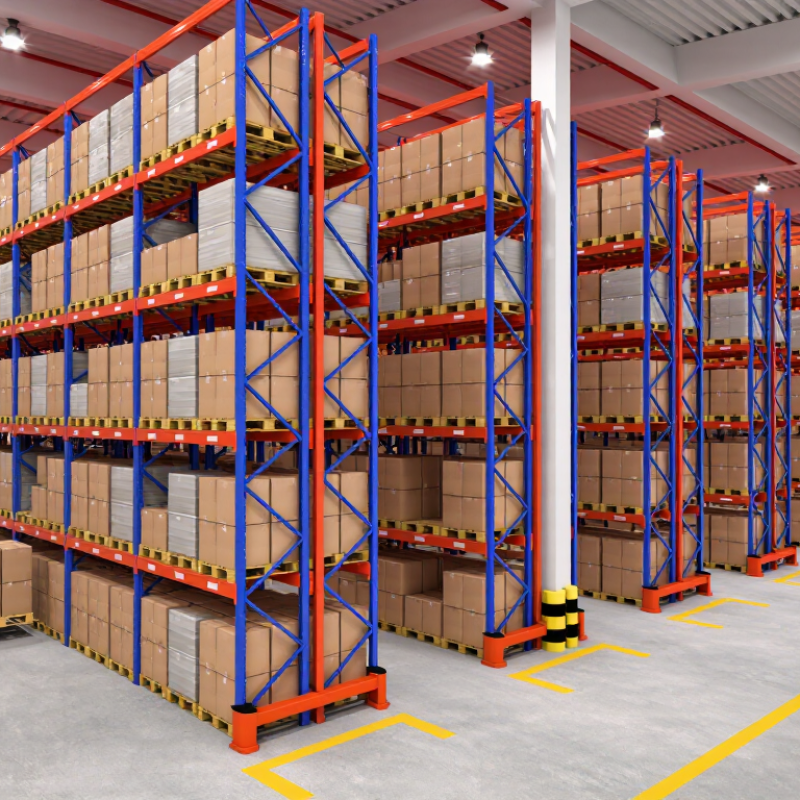
China Top Push Back Storage Rack Manufacturers?

What Is a Push-Back Storage Rack?

A push-back storage rack is a high-density pallet system designed for last-in, first-out inventory. It uses nested carts or sliding rails inside each lane. A forklift places a pallet at the front, then gently pushes earlier pallets backward. Removal follows the reverse path.

Most systems hold two to six pallets deep. They use fewer aisles than selective racking, which can increase usable storage capacity. The 2024 MHI Annual Industry Report states that 55% of supply-chain leaders plan to increase technology investment. That pressure makes space-efficient systems increasingly relevant. However, push-back racks are not a universal solution. They suit stable, high-volume stock better than products requiring strict first-in, first-out rotation.

A practical design begins with pallet dimensions, load weight, ceiling height, and forklift clearance. Rail slope, cart strength, frame anchoring, and impact protection also require engineering review. ANSI/RMI MH16.1 provides design guidance for steel industrial storage racks, while OSHA emphasizes inspection and safe operating practices. In daily use, operators should check bent beams, damaged rails, loose anchors, and uneven pallets. One careless placement can stop a lane.

The system saves travel time.

Yet capacity claims need skepticism. Real capacity depends on aisle width, fire protection, pallet condition, and local codes. A supplier’s catalog number alone cannot prove suitability. Reviewing site measurements and load data with a qualified rack engineer remains the safer decision.

How Does Push-Back Racking Work?

Push-back racking stores pallets on inclined rails or wheeled carts. A forklift places the first pallet at the lane entrance. The next pallet pushes it gently toward the rear. Each new load moves the previous pallets backward, using the lane depth efficiently.

When retrieving stock, the forklift removes the front pallet first. The remaining pallets then roll forward under controlled gravity. This creates a last-in, first-out flow. It works well for warehouses handling several pallets of the same product. Deep lanes can reduce travel distance and improve floor utilization.

In practical warehouse checks, rail alignment and pallet quality matter greatly. A damaged pallet may drag, stop, or shift unevenly. Load weights must match the rack design, and the lane slope needs professional verification. Operators should enter squarely, control speed, and avoid sudden braking. Small mistakes become expensive.

The system is not automatic.

Before installation, storage engineers should review pallet dimensions, load distribution, aisle width, and seismic conditions. Regular inspections should check carts, rollers, frames, guards, and connections.

Some facilities expect faster handling than push-back racking can provide. That is a planning issue, not a rack failure. Clear labels and operator training also reduce confusion when products look similar.

Key Features of China’s Top Push-Back Rack Manufacturers

China’s top push-back rack manufacturers compete through engineering discipline, not only low production cost. Their systems usually support LIFO storage, high-density pallet access, and two to six loading levels. MHI’s 2024 Annual Industry Report found that 55% of supply-chain professionals planned to increase technology investment. That pressure makes accurate rack design more important than attractive pricing. Leading factories calculate beam deflection, trolley capacity, pallet dimensions, and floor loading before production. They also provide galvanized rails, adjustable guides, and impact protection for busy warehouse aisles.

Quality control is visible in small details. Reliable manufacturers use certified steel, controlled welding, powder-coating tests, and traceable component records. Independent load testing should match the customer’s pallet weight and cycle frequency. The European Federation of Material Handling recommends clear racking inspection practices, including checks for deformation and damaged uprights. Chinese manufacturers serving export markets often prepare drawings, installation manuals, and compliance documents for different regional requirements. Documentation matters.

After-sales support separates experienced suppliers from ordinary fabricators. Technical teams should verify aisle width, forklift turning radius, temperature, and uneven floors before recommending a layout. A cold-storage project may need different coatings and clearance tolerances. Mistakes happen.

The weak point is customization without disciplined review. A faster quotation does not prove safer engineering. Buyers should request load calculations, material certificates, inspection records, and replacement-part timelines. Those records reveal whether a manufacturer controls the whole process or simply assembles standard parts.

China Top Push Back Storage Rack Manufacturers? - Key Features of China’s Top Push-Back Rack Manufacturers
Evaluation Dimension Typical Specification or Capability Key Feature to Look For Practical Verification Point
Storage Principle FIFO-free, last-in-first-out storage using inclined rail lanes Pallets are loaded and retrieved from the same aisle, reducing travel distance Confirm that the design matches products with stable batch and expiration requirements
Load Capacity Commonly engineered for approximately 500–1,500 kg per pallet position, subject to design Beam, frame, trolley, and floor loads are calculated as one complete system Request stamped load calculations and the rated capacity for every storage level
Lane Depth Often configured for several pallets in depth; exact depth depends on pallet size and handling method Deeper lanes improve density but require consistent pallet quality and controlled loading Check pallet overhang, lane length, trolley travel, and retrieval clearance
Pallet Compatibility Designed around standard pallet dimensions, pallet weight, pallet material, and bottom-board layout Rail spacing and trolley wheel design prevent pallet damage and instability Test the actual pallet samples, including loaded pallets with different weights
Structural Materials Cold-formed or hot-rolled steel components selected according to load and seismic requirements Consistent steel thickness, accurate forming, and properly reinforced connection points Review material certificates, component drawings, and weld or connection inspection records
Rail and Trolley System Inclined rails with guided trolleys, rollers, or wheel assemblies Smooth movement, controlled acceleration, anti-derailment design, and replaceable wear parts Conduct loaded and unloaded travel tests and inspect stopping performance
Safety Components Backstops, end stops, guide rails, pallet positioners, row spacers, and load protection features Prevents pallet overrun, trolley derailment, accidental displacement, and rack impact Verify safety devices through drawings, functional testing, and site acceptance inspection
Surface Protection Powder coating or galvanized treatment selected according to indoor, cold-storage, or humid conditions Even coating coverage, good adhesion, and corrosion protection at edges and welded areas Specify coating thickness, pretreatment process, color, and corrosion-resistance requirements
Space Utilization High-density storage with fewer operating aisles than conventional selective pallet racking Improves cubic utilization where the number of stock-keeping units is limited Compare usable pallet positions and total floor area against selective or drive-in layouts
Customization Adaptable to warehouse height, pallet dimensions, forklift type, temperature, and seismic conditions Engineering support converts site constraints into a verified rack layout Require layout drawings, column loads, aisle dimensions, tolerances, and installation details
Quality Control Dimensional inspection, welding or connection checks, coating inspection, and load or movement testing Documented quality procedures reduce dimensional variation and installation problems Ask for inspection plans, test records, traceability documents, and pre-shipment photographs
Compliance Documentation Engineering calculations, installation manuals, operating instructions, and maintenance recommendations Clear documentation supports safe operation and local approval requirements Confirm compliance with the applicable local storage-rack, building, fire, and seismic codes
After-Sales Support Spare parts, installation guidance, maintenance advice, and technical response after delivery Replaceable trolley wheels, rails, stops, and protection parts help reduce downtime Confirm spare-part availability, response procedures, training, and warranty terms in writing
Note: Capacity, dimensions, materials, and compliance requirements must be confirmed through project-specific engineering calculations and applicable local regulations.

How to Evaluate Push-Back Rack Manufacturers in China

Evaluating push-back rack manufacturers in China requires more than comparing online prices. Start by checking their engineering experience with dynamic storage systems, not only standard pallet racks. Ask for load calculations, rack drawings, steel grades, and tolerance data. A reliable manufacturer should explain how carts, rails, frames, and guards work together under repeated loading. Request photos of completed warehouses and contactable customer references. Specific evidence matters.

Arrange a factory audit when possible. Inspect welding areas, powder-coating lines, measuring tools, and material storage. Ask how workers record defects and verify dimensions before shipment. Independent load testing can confirm stability, deflection, and safe operating limits. Certifications are useful, but they should match the supplied product and current production site. Do not accept copied documents without checking issuing organizations.

Tips: Send your pallet dimensions, load weights, forklift type, aisle limits, and temperature conditions before requesting quotations. Compare complete system costs, including installation guidance, spare parts, packaging, and delivery protection. Clarify response times for damaged components and technical questions. A video meeting with an engineer can reveal practical knowledge quickly. I would also order a small trial section first. It may slow purchasing, but it can expose design misunderstandings early. One detail is easy to miss: confirm whether the quoted capacity applies per pallet position or per level.

How to Evaluate Push-Back Rack Manufacturers in China

The chart shows representative industry benchmarks for evaluating push-back rack suppliers. Values are normalized to the upper end of each technical range; use the actual figures in quotations, structural calculations, load tests, and project drawings for final supplier validation.

Applications and Selection Criteria for Push-Back Storage Racks

Push-back storage racks suit warehouses handling several pallets of the same product. They use nested carts or wheeled frames, allowing forklifts to load and retrieve pallets from one aisle. This design increases storage density and reduces travel distance. It works well for cold storage, beverage distribution, seasonal goods, and medium-turnover inventory. The system normally follows a last-in, first-out flow. That limitation matters.

The U.S. Census Bureau reported that e-commerce represented 16.1% of total retail sales in 2024. This pressure makes compact, responsive storage more valuable. Yet push-back racks are not ideal for every order profile. Select them when each stock-keeping unit occupies multiple pallet positions. Avoid them when operators need strict first-in, first-out rotation. Perishable goods may require another rack design.

Selection should begin with pallet weight, dimensions, rack depth, ceiling height, and forklift reach. Confirm the required number of pallet positions per lane. Check floor capacity and seismic conditions with a qualified engineer. The Rack Manufacturers Institute’s ANSI MH16.1 standard provides useful structural guidance. MHI’s 2024 Annual Industry Report found that 55% of surveyed organizations planned to increase supply-chain innovation investment. That supports careful automation planning, not automatic automation. Test the carts with real pallets. Small alignment problems become expensive quickly.

FAQS

What is a push-back storage rack?

It is a high-density pallet system using inclined rails or nested carts. Pallets usually move two to six positions deep.

How does pallet movement work?

A forklift places a pallet at the lane entrance. The next pallet gently pushes it backward. Removal follows the reverse path.

What inventory rotation does it provide?

Push-back racking provides last-in, first-out rotation. It suits stable products stored in several pallets per lane.

Can it improve warehouse capacity?

Yes, it can reduce aisle requirements and increase usable floor space. The real gain depends on aisle width and site conditions.

What products may not suit this system?

Products needing strict first-in, first-out rotation may be unsuitable. Frequently changing stock can also create handling difficulties.

What details should engineers check before installation?

They should review pallet dimensions, load weight, ceiling height, aisle width, and forklift clearance. Rail slope and anchoring also need attention.

What daily problems should operators inspect?

Check bent beams, damaged rails, loose anchors, uneven pallets, carts, and guards. One careless placement can stop a lane.

How should forklifts operate in the lanes?

Operators should enter squarely, control speed, and avoid sudden braking. Clear labels and training help prevent product confusion.

Does push-back racking operate automatically?

No. Pallets move through gravity and controlled handling. The system still depends heavily on forklift accuracy.

Are advertised capacity figures always reliable?

Not always. Fire protection, pallet condition, local codes, and aisle space can change the result. I would verify measurements before trusting a catalog figure.

Conclusion

Push-Back Storage racks are high-density pallet systems designed to use warehouse space efficiently while maintaining convenient access to multiple pallet positions. Unlike conventional pallet shelving, they use inclined rails and wheeled carts, allowing pallets to be loaded and unloaded from one aisle. When a new pallet is placed in a lane, it gently pushes the previous pallet toward the back; when the front pallet is removed, the stored pallets move forward by gravity. This arrangement supports last-in, first-out inventory management and reduces unnecessary forklift travel.

China’s leading push-back rack manufacturers typically focus on strong structural design, reliable components, accurate manufacturing, flexible customization, and compliance with applicable safety requirements. When evaluating a supplier, buyers should consider material quality, load capacity, engineering support, production control, installation guidance, and after-sales service. These racks are suitable for warehouses handling uniform products, limited stock-keeping units, and high-volume pallet storage. Selection should be based on pallet dimensions, weight, aisle layout, storage height, turnover rate, forklift type, and the required balance between density, accessibility, and operational safety.

Ethan

Ethan

Ethan is a seasoned marketing professional with a deep expertise in our company's innovative product line. With a passion for sharing knowledge and insights, he takes the lead in regularly updating our corporate blog, where he explores industry trends, product features, and effective marketing......