Top 10 Steel Container Types for Global Buyers

Time:2026-10-11 Author:Isabella
0%

Steel Containers remain essential to global trade, construction, storage, and specialized transport. Their strength protects cargo through ports, warehouses, rail networks, and changing weather. Yet choosing the right container involves more than comparing prices or dimensions. Buyers must examine steel grade, corrosion resistance, door design, floor capacity, ventilation, insulation, and certification records.

This guide introduces the top 10 Steel Containers for global buyers. It covers standard dry containers, high-cube models, open-top units, flat racks, side-open designs, refrigerated containers, and other practical configurations. Each type serves a different operational need. A high-cube container may suit bulky machinery, while an insulated model can protect temperature-sensitive goods. Open-top units simplify loading when cranes handle tall equipment.

Details matter.

Experienced buyers inspect weld quality, locking bars, hinges, corner castings, and flooring before purchase. They also confirm dimensions, payload limits, CSC-related documentation, and regional handling requirements. A container that performs well in one climate may require stronger coatings elsewhere. Salt air near coastal terminals can expose weak paint quickly.

The recommendations reflect common industry practices and practical procurement concerns. Still, no universal choice exists. Specifications can vary between manufacturers, production years, and markets. Some buyers focus too heavily on the initial quotation. That can be a costly mistake. Maintenance access, repair availability, delivery distance, and total service life deserve equal attention.

The aim is clear guidance, not a perfect formula. Careful comparison supports safer decisions, more predictable costs, and better long-term value.
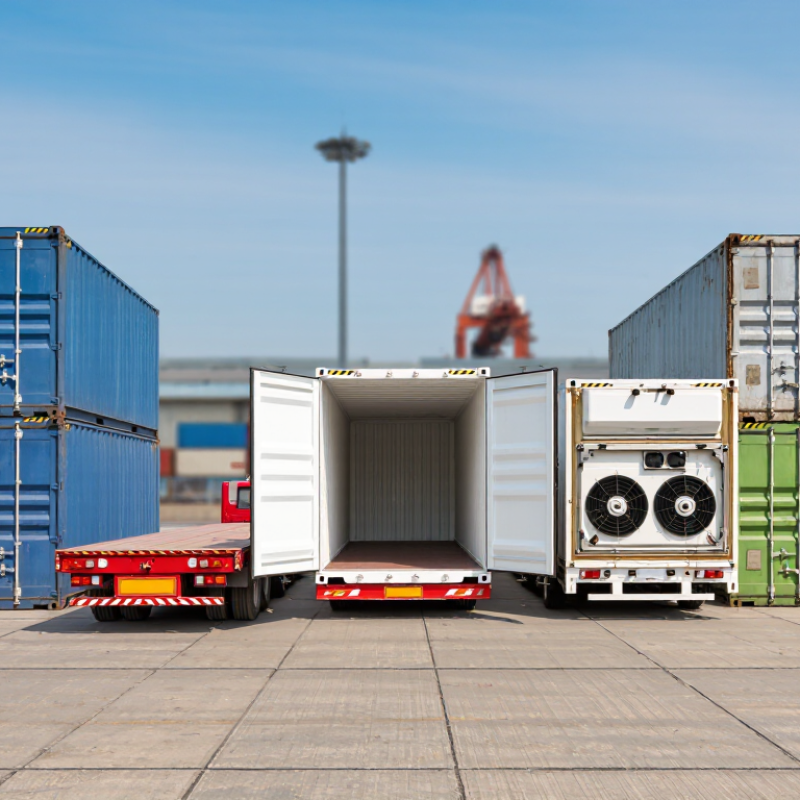
Top 10 Steel Container Types for Global Buyers

Steel Container Fundamentals: Materials, Standards, and Core Functions

Steel containers are built for controlled movement, storage, and protection across demanding supply chains.

Most use weather-resistant steel because it balances strength, repairability, and cost. Galvanized steel improves corrosion resistance in humid environments. Stainless steel serves specialized applications where cleanliness matters more than price. Material choice changes service life.

Global buyers commonly compare ten container types, including general-purpose, high-cube, open-top, flat-rack, side-opening, insulated, refrigerated, tank, platform, and ventilated designs. Each type solves a different handling problem. A general-purpose unit suits boxed cargo, while a flat-rack supports oversized machinery. Refrigerated models require stable temperature control and careful inspection of insulation, doors, and power connections. Tank containers demand stricter engineering and documented maintenance. Fit matters more.

Standards make specifications easier to verify. ISO dimensions support compatibility with ships, rail systems, and handling equipment. CSC requirements address structural safety before international transport. Buyers should also review weld quality, floor loading, door operation, corner castings, and coating thickness. In practical inspections, small details often reveal larger risks, such as uneven doors or trapped moisture beneath floor boards. I have found that a clean exterior can hide internal corrosion. This is why photos alone are insufficient. Ask for inspection records, load ratings, manufacturing data, and repair history. Standards guide decisions, but local climate and actual cargo conditions still deserve closer thought.

How Steel Containers Are Classified by Structure and Intended Use

Top 10 Steel Container Types for Global Buyers

Steel containers are commonly classified by structure and intended use. In procurement work, this distinction prevents costly mismatches. A standard dry cargo container has sealed walls and doors for general goods. An open-top container uses a removable roof for machinery or tall cargo. A flat-rack container has collapsible ends and reinforced floors for oversized loads. A platform container removes the side structure almost entirely. It suits heavy, wide equipment that needs careful securing.

Intended use creates another practical group. Tank containers hold approved liquids or gases within a protected steel frame. Insulated containers reduce heat transfer for temperature-sensitive cargo. Refrigerated containers actively control temperature, but they require reliable power and routine equipment checks. Ventilated containers use designed airflow for goods needing air circulation. Side-opening containers provide wider access when front-door loading is inefficient. Collapsible containers save storage space when returned empty.

These categories can overlap. A refrigerated unit is also a specialized dry-structure design. A flat rack may carry industrial equipment, but its loading limits depend on floor strength and weight distribution. Buyers should inspect welds, corner castings, door seals, drainage points, and internal corrosion. Small defects matter. A damaged corner fitting can delay handling or create safety concerns. Confirm dimensions, payload, lifting points, and applicable international standards before purchase. Specifications sometimes look complete but omit floor loading data. That omission deserves a direct question.

The Top Ten Steel Container Types for Global Buyers

Top 10 Steel Container Types for Global Buyers

The top ten steel container types for global buyers serve different cargo, handling, and climate requirements. Standard dry containers suit general cartons, machinery, and palletized goods. High-cube containers add approximately 30 centimeters of internal height. Side-opening and double-door models improve access for long or awkward loads. Insulated containers protect temperature-sensitive cargo without active cooling. Reefer containers provide controlled temperatures, but they require reliable power and maintenance. Fit matters.

Open-top containers handle tall machinery and bulk cargo loaded by crane. Hard-top containers offer removable steel roofs and stronger overhead protection. Flat-rack containers support heavy, oversized equipment with foldable end walls. Platform containers provide a reinforced base for exceptional dimensions. Tank containers carry approved liquids under strict engineering and safety requirements. ISO 668 establishes key dimensions and ratings for Series 1 freight containers, supporting consistent international handling.

UNCTAD’s Review of Maritime Transport 2024 recorded 12.3 billion tonnes of seaborne trade in 2023, showing the scale behind container selection. That scale also magnifies small errors. A high-cube unit may waste money when payload limits arrive first. A reefer can fail through poor pre-trip inspection, not unsuitable design. Condensation is unforgiving. Procurement teams should verify ISO compliance, payload, floor strength, door clearance, corrosion condition, and destination handling equipment. The World Bank’s Logistics Performance Index 2023 also highlights infrastructure and shipment reliability as practical purchasing concerns. I would still recheck local terminal limits, because published specifications do not always reflect real operating conditions.

Top 10 Steel Container Types for Global Buyers - The Top Ten Steel Container Types for Global Buyers

No. Container Type Common ISO Length Approx. External Dimensions
(L × W × H)
Typical Tare Weight Typical Maximum Gross Weight Main Cargo Applications Key Buying Considerations
1 Standard Dry Container 20 ft / 40 ft 6.06 / 12.19 m × 2.44 m × 2.59 m Approximately 2,200–3,900 kg Up to about 30,480 kg Packaged goods, machinery, furniture, general cargo Check CSC safety approval, floor load rating, door condition, and internal cubic capacity.
2 High-Cube Dry Container 40 ft / 45 ft 12.19 / 13.72 m × 2.44 m × 2.90 m Approximately 3,700–4,800 kg Usually up to about 30,480 kg Lightweight, bulky, or tall cargo requiring additional volume Confirm route acceptance, door height, payload limits, and compatibility with handling equipment.
3 Open-Top Container 20 ft / 40 ft 6.06 / 12.19 m × 2.44 m × 2.59 m Approximately 2,300–4,200 kg Often up to about 30,480 kg Scrap metal, stone, timber, industrial equipment, and over-height cargo Review removable roof design, lashing points, payload distribution, and permissible over-height procedures.
4 Flat-Rack Container 20 ft / 40 ft 6.06 / 12.19 m × 2.44 m; fixed or collapsible ends Approximately 2,700–6,000 kg Commonly 34,000–45,000 kg, subject to design Heavy machinery, steel structures, vehicles, pipes, and oversized cargo Verify deck strength, lashing rings, concentrated-load limits, and out-of-gauge transport rules.
5 Platform Container 20 ft / 40 ft 6.06 / 12.19 m × 2.44 m; platform deck only Approximately 2,800–6,000 kg Commonly 34,000–45,000 kg, subject to design Very heavy, wide, or unusually shaped project cargo Demand engineered cargo securing, verified deck capacity, and a documented transport plan.
6 Refrigerated Container 20 ft / 40 ft high-cube 6.06 / 12.19 m × 2.44 m × approximately 2.59–2.90 m Approximately 2,800–4,800 kg Usually up to about 30,480 kg Food, pharmaceuticals, flowers, chemicals, and temperature-sensitive goods Assess temperature range, power requirements, insulation, airflow, monitoring, and service support.
7 Tank Container 20 ft Approximately 6.06 m × 2.44 m × 2.59 m Approximately 3,600–4,500 kg Often 36,000–36,500 kg, subject to approval Liquids, powders, gases, food products, and hazardous substances Confirm tank code, pressure rating, product compatibility, cleaning standard, and dangerous-goods compliance.
8 Insulated Container 20 ft / 40 ft 6.06 / 12.19 m × 2.44 m × approximately 2.59 m Approximately 2,500–4,500 kg Usually up to about 30,480 kg Cargo needing thermal buffering without active refrigeration Compare insulation material, thermal performance, vapor control, hygiene, and ventilation options.
9 Side-Opening Container 20 ft / 40 ft 6.06 / 12.19 m × 2.44 m × 2.59 m Approximately 2,500–4,500 kg Usually up to about 30,480 kg Palletized cargo, retail fixtures, event equipment, and long items Check side-door opening width, locking hardware, weather seals, and structural reinforcement.
10 Half-Height Container 20 ft Approximately 6.06 m × 2.44 m × 1.30 m Approximately 1,800–3,000 kg Often up to about 30,480 kg Dense bulk cargo, minerals, scrap, aggregate, and heavy low-profile goods Verify low-height clearance, corrosion protection, discharge method, payload distribution, and route suitability.

Note: Dimensions, tare weights, and maximum gross weights are typical industry ranges. Actual specifications vary by container design, certification, country regulations, and operating route.

Key Buying Criteria: Capacity, Durability, Safety, and Compliance

Top 10 Steel Container Types for Global Buyers

Capacity, durability, safety, and compliance shape every serious container purchase. General-purpose, high-cube, open-top, flat-rack, platform, tank, insulated, refrigerated, side-opening, and ventilated containers serve different cargo needs. A high-cube unit adds approximately 30 centimeters of internal height, which can improve pallet efficiency. However, extra space does not replace accurate load planning.

Capacity must match both cargo volume and weight. ISO 668 defines standardized external dimensions, while the CSC Convention requires safety approval before international transport. Buyers should verify the maximum gross mass plate, corner casting condition, floor load rating, and door alignment. A scratched surface is minor; distorted posts are not. The distinction is easy to miss during remote purchasing.

Durability depends on steel thickness, weld quality, coating systems, and maintenance records. Inspectors should check roof seams, undercarriage corrosion, locking bars, and moisture stains inside the floor. The UNCTAD Review of Maritime Transport 2024 recorded global maritime trade at about 12.3 billion tonnes in 2023, showing why consistent container performance matters across long routes. The World Bank’s 2023 Logistics Performance Index also emphasizes reliability, tracking, and timely delivery. Yet paperwork is still frequently treated as secondary. That is a mistake. Certificates, inspection dates, payload data, and repair history should be reviewed before price negotiation. Cheap units can become expensive through delays, rejected gates, or damaged cargo. Safety is never just a specification.

Top 10 Steel Container Types for Global Buyers

Key buying criteria: capacity, durability, safety, and compliance

How to read this chart: Values show representative nominal or internal capacity in cubic metres based on commonly used international container formats. Actual capacity varies by wall thickness, insulation, fittings, door configuration, and manufacturer specification. Buyers should also verify structural condition, payload rating, CSC approval for intermodal units, and applicable ADR or IMDG requirements for regulated cargo.

How to Compare Suppliers, Pricing, Logistics, and Long-Term Value

Top 10 Steel Container Types for Global Buyers

Steel container selection starts with cargo, not catalog photographs. Common options include dry, high-cube, reefer, open-top, flat-rack, platform, side-door, double-door, insulated, and tank containers. Each design changes payload, handling, maintenance, and resale potential. UNCTAD’s Review of Maritime Transport reports that ships carry over 80% of global merchandise trade by volume. Small design weaknesses can therefore become expensive during repeated port and inland transfers.

Compare suppliers through landed cost, not unit price. Request steel grades, weld inspection records, coating specifications, floor load ratings, and valid safety certifications. Pricing should include ocean freight, inland delivery, insurance, duties, inspection, and possible storage charges. The World Steel Association reported global crude steel production of about 1.88 billion tonnes in 2024. Steel availability can influence lead times and regional quotations.

However, cheaper steel does not always mean better value. Door alignment, gasket quality, corrosion protection, and repair access matter after five years. I would also challenge optimistic resale forecasts; local demand can change quickly.

Tips: Build a comparison sheet with cost per usable cubic meter, payload, delivery time, and expected repair expense. Inspect a production sample. Photograph welds, floors, locking bars, and roof seams. Ask for independent inspection before payment. One overlooked detail can erase the saving. Recheck assumptions every quarter.

FAQS

Which steel container suits cartons, machinery, and palletized goods?

A standard dry container fits most general cargo. It handles boxed goods and ordinary machinery. Check weight distribution carefully. I sometimes underestimate floor pressure.

Why choose a high-cube container?

A high-cube container provides about 30 centimeters of extra internal height. It can improve pallet stacking and loading efficiency. Extra height does not increase the permitted weight.

When is a side-opening or double-door container useful?

These containers provide wider access for long, bulky, or awkward cargo. Forklifts can approach from different directions. Measure the loading area first. Door space can still surprise you.

What cargo requires an open-top or hard-top container?

Open-top containers suit tall machinery and crane-loaded cargo. Hard-top models provide stronger overhead protection with removable steel roofs. Confirm crane clearance before booking transport.

How do flat-rack and platform containers differ?

Flat-rack containers support heavy, oversized equipment with foldable end walls. Platform containers offer a reinforced base for exceptional dimensions. They need careful securing and suitable lifting equipment. Fit remains uncertain until measured.

When should buyers select an insulated or refrigerated container?

Insulated containers help protect temperature-sensitive cargo without active cooling. Refrigerated containers maintain controlled temperatures with dependable power and maintenance. Inspect the unit before loading. Condensation can damage cargo quietly.

What liquids can tank containers carry?

Tank containers carry approved liquids under strict engineering and safety requirements. Confirm the liquid, pressure rating, certification, and destination rules. Never rely on appearance alone. Documentation matters more than a clean exterior.

Which inspections should buyers complete before purchasing?

Check the maximum gross mass, floor strength, corner castings, doors, roof seams, and corrosion. Review inspection dates, repair history, certificates, and payload information. Photographs may hide bent posts or moisture stains. I would request independent inspection.

Why do local handling conditions affect container selection?

Terminal limits, road restrictions, lifting equipment, and gate procedures vary by location. Published specifications may not reflect real operating conditions. Recheck local limits before payment. Small errors become expensive delays.

Conclusion

Steel Containers are essential solutions for the safe storage, handling, and transportation of goods across international supply chains. This article introduces their core materials, manufacturing standards, protective features, and practical functions, while explaining how designs differ according to structure and intended use. It reviews ten major container types, including options for general cargo, liquid storage, temperature-sensitive products, open-top loading, and specialized industrial applications. Each type is evaluated according to its advantages, limitations, and most suitable operating conditions.

For global buyers, selecting the right Steel Containers requires more than comparing capacity. Important considerations include load strength, corrosion resistance, stacking performance, ventilation, security, maintenance needs, and compliance with relevant transport and safety requirements. The article also outlines how to assess suppliers through product consistency, technical support, customization capabilities, pricing transparency, delivery arrangements, and after-sales service. By considering total ownership costs rather than the initial purchase price alone, buyers can choose durable, efficient, and reliable containers that provide long-term value.

Isabella

Isabella

Isabella is a dedicated marketing professional with a sharp focus on driving brand growth and engagement through strategic content creation. With an extensive background in digital marketing, she combines her passion for storytelling with her keen understanding of industry trends to deliver......