Choosing the right Steel Platforms can improve safety, workflow, and long-term operating costs in demanding industrial environments. These structures support maintenance crews, machinery access, storage tasks, and elevated production areas. However, the best option depends on more than price or advertised load capacity.
This guide examines seven practical steel platform types for factories, warehouses, processing plants, and outdoor facilities. Each option is considered through load ratings, deck design, guardrails, stair access, corrosion resistance, installation needs, and maintenance requirements. Real industrial conditions matter. A platform near cooling towers faces moisture, while one beside a furnace may require stronger heat resistance. Surface grip also matters when workers carry tools across oily or dusty areas.
Details matter. Fit matters.
Reliable selection should begin with verified manufacturer specifications and review by qualified structural professionals. Applicable local building, workplace safety, and fire requirements must also be checked before installation. A platform may appear strong, yet poor anchoring or unsuitable drainage can create serious weaknesses. Weld quality, bolt condition, inspection access, and replacement parts deserve equal attention.
Not every platform wins.
The recommendations below aim to balance durability, worker access, flexibility, and lifecycle value. They also recognize an uncomfortable truth: no single design suits every facility. Some conclusions may change after a site survey, especially where vibration, chemical exposure, unusual loading, or limited headroom exists. Careful measurements and honest risk assessment remain more dependable than attractive brochures.
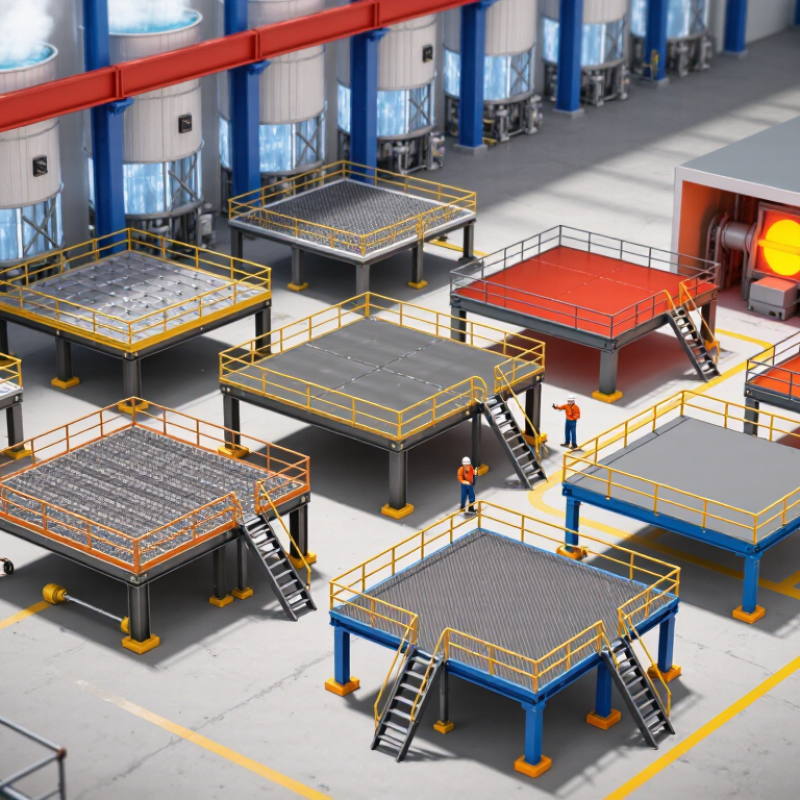
Choosing the seven best steel platforms starts with the hazard, not the catalog. Useful options include mezzanine, maintenance, machine-access, crossover, loading, inspection, and stair platforms. OSHA 1910.22 requires walking-working surfaces to remain clean, orderly, sanitary, and reasonably dry. It also requires regular inspection and prompt correction of unsafe conditions. A platform with oil near a ladder is not compliant in practice.
ISO 14122 guides permanent access to machinery. Its requirements cover stairs, ladders, guardrails, clearances, and safe movement. Check handrail continuity, toe-board placement, slip resistance, and landing space. AISC 360 supports the structural design of steel members, connections, and load paths. Specify live loads, equipment loads, impact forces, corrosion exposure, and deflection limits. Do not size beams from walking loads alone. Motors, pallets, and maintenance tools may create concentrated forces.
Data supports this caution. The U.S. Bureau of Labor Statistics reported that falls, slips, and trips represented 20.4% of private-industry nonfatal injuries involving days away from work in 2023. The National Safety Council also identifies falls as a persistent workplace injury source. Design reviews should therefore include field observation, not only calculations. Workers notice awkward gates and slippery grating first. Engineers can miss those details. That is the imperfect part. Recheck the design after installation, especially where drainage, access, or operator behavior differs from drawings.
| Rank | Steel Platform Type | Typical Industrial Application | Common Configuration | Recommended Deck Options | Key Design and Selection Criteria | Relevant Standard Checkpoints | Best Suited For |
|---|---|---|---|---|---|---|---|
| 1 | Fixed Elevated Work Platform | Routine operation, inspection, and maintenance around machinery, tanks, conveyors, and production lines. | Steel beams or channels supported by columns, braced frames, or connections to a building structure. | Open bar grating for drainage and ventilation; checker plate where a solid walking surface is required. | Verify dead loads, personnel loads, equipment loads, impact, vibration, deflection, corrosion exposure, guardrails, toe boards, and safe access. | OSHA 1910.22 for walking-working surfaces; ISO 14122 for permanent access; AISC 360 for steel member and connection design. | Permanent production areas requiring robust access and frequent servicing. |
| 2 | Equipment Access Platform | Access to motors, valves, filters, instruments, pumps, compressors, and other service points. | Compact platform with stairs or a fixed ladder, guardrails on exposed edges, and localized equipment openings. | Galvanized serrated grating in wet or oily areas; anti-slip solid plate where small components could fall through. | Prioritize clearances, ergonomic reach, slip resistance, drainage, fall protection, removable sections, and maintenance load requirements. | OSHA 1910.22 requirements for clean, orderly, and sanitary surfaces; ISO 14122 access geometry and fall protection; AISC 360 structural verification. | Facilities where technicians need safe, repeatable access to elevated equipment. |
| 3 | Modular Steel Platform | Projects requiring phased installation, layout changes, relocation, or rapid expansion. | Bolted frames, standardized bays, adjustable components, and prefabricated stairs or handrail sections. | Bolted steel grating panels or replaceable checker-plate modules. | Check connection slip, module tolerances, cumulative deflection, anchorage, bracing, transport limits, and future load changes. | AISC 360 for bolted and welded connections and structural members; OSHA 1910.22 and ISO 14122 for the completed walking surface and access system. | Retrofits, temporary production layouts, and facilities with changing process equipment. |
| 4 | Mezzanine Work Platform | Additional operating, storage, packaging, or inspection space inside a high-bay industrial building. | Independent steel columns, primary beams, secondary joists, perimeter guardrails, stairs, and controlled material-access points. | Steel bar grating for industrial access; composite or solid decking where storage and small-part containment are important. | Confirm floor live load, concentrated storage loads, forklift or cart effects, vibration, fire protection, headroom, egress, and building foundation capacity. | AISC 360 for the steel framing system; OSHA 1910.22 for walking-working surfaces; ISO 14122 where the mezzanine provides permanent machinery access. | Warehouses, processing plants, and facilities needing usable floor area without building expansion. |
| 5 | Conveyor Maintenance Platform | Inspection, cleaning, belt tracking, component replacement, and transfer-point maintenance. | Long narrow walkway or side platform with intermediate supports, handrails, toe boards, and access stairs. | Serrated grating with suitable bearing bars and supports; solid sections may be used near spill points. | Evaluate walkway width, crossover locations, belt motion hazards, dropped-object control, cleaning access, vibration, and emergency egress. | OSHA 1910.22 for surface condition and housekeeping; ISO 14122 for permanent access, stairs, walkways, and guardrails; AISC 360 for framing and connections. | Material-handling systems and continuous-process lines with elevated conveyors. |
| 6 | Loading and Sampling Platform | Truck, railcar, vessel, hopper, tank, or bulk-material loading and sampling operations. | Cantilevered or independently supported platform with stairs, access gates, handrails, and optional adjustable bridging sections. | Slip-resistant galvanized grating or solid plate selected for spills, weather, and cleaning requirements. | Account for personnel, tools, hoses, loading equipment, wind, impact, vehicle interface, drainage, corrosion, and fall hazards during transfer operations. | OSHA 1910.22 for walking-working surfaces and housekeeping; ISO 14122 for permanent access components; AISC 360 for structural and connection design. | Bulk handling, chemical processing, food processing, and outdoor transfer stations. |
| 7 | Outdoor Corrosion-Resistant Platform | External access to tanks, utilities, roof-level equipment, pipe racks, and weather-exposed process areas. | Hot-dip galvanized or suitably coated steel framing with bracing, drainage-conscious decking, stairs, and continuous guardrails. | Galvanized serrated grating with corrosion-compatible fasteners; solid decking may be used where containment is required. | Design for wind, snow, rain, ice, thermal movement, corrosion category, drainage, coating repair, lightning or bonding needs, and inspection access. | AISC 360 for structural resistance; OSHA 1910.22 for safe walking surfaces; ISO 14122 for permanent outdoor access and fall protection. | Chemical plants, utilities, refineries, wastewater facilities, and other exposed industrial environments. |
Choose grated catwalks for drainage and ventilation. Use solid decks where falling tools could endanger people below. Crossover bridges, inspection platforms, and maintenance platforms serve different access needs. The choice depends on load, clearance, cleaning, and drainage.
It covers permanent working platforms and walkways. Designers should provide clear passage, guardrails, toe protection, and safe access. A platform may look compliant on paper. Check the real installation.
It covers stairs, stair ladders, and related protective measures. Review stair pitch, tread depth, handrail continuity, landing space, and edge protection. A nearby cabinet can block an otherwise acceptable stair route.
Open grating helps drain rain, oil, and cleaning water. It also improves visibility between levels. Small wheels may catch in the openings. Carry parts carefully.
Solid decking helps protect lower areas from falling tools and materials. It can suit spaces beneath active maintenance work. However, spilled liquid may remain on the surface. Drainage needs attention.
Look for loose grating, sharp cut edges, blocked landings, and slippery contamination. Inspect corrosion beneath supports and around trapped water. Check connections closely. Weak details can fail first.
No. Galvanizing protects steel from corrosion, but it does not replace engineering calculations. Verify load capacity, deflection, anchorage, weld quality, and stair geometry. A thick coating cannot repair a weak connection.
Provide drainage, sloped surfaces, open grating, sealed joints, and accessible inspection points. Remove trapped water and chemical residue promptly. Repair installation damage quickly. Coating thickness alone is not enough.
Keep structural load calculations, installation checks, and periodic inspection records. Record corrosion findings and corrective work. Housekeeping matters too. It is easy to underestimate.
Not necessarily. Steel may perform poorly where corrosion, noise, or manual handling dominates. Compare the site environment before specifying it everywhere. I would review the decision twice.
Selecting the right Steel Platforms for industrial use requires careful attention to safety, strength, accessibility, and environmental conditions. This guide explains how OSHA 1910.22, ISO 14122, and AISC 360 support decisions involving structural design, safe walking surfaces, guardrails, stairs, and maintenance access. For fixed work platforms and mezzanines, it compares ASTM A36 steel, with a 36 ksi yield strength, and A572 Grade 50, which provides higher strength for demanding applications. The discussion also covers modular and adjustable platforms, emphasizing ANSI MH28.2 requirements for load capacity, stability, and practical configuration.
Special consideration is given to steel catwalks and stair platforms, including the access and dimensional principles outlined in ISO 14122-2 and ISO 14122-3. For outdoor or corrosive environments, galvanized platforms are reviewed through the protective coating requirements of ASTM A123. Together, these criteria help facility managers choose durable, compliant, and fit-for-purpose platform systems based on load demands, layout, access frequency, and exposure conditions.

 Kimsuk Storage