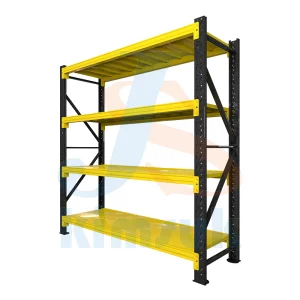
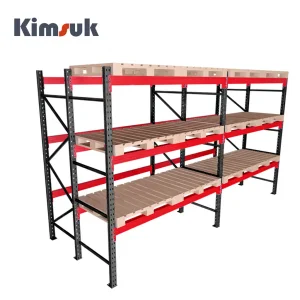
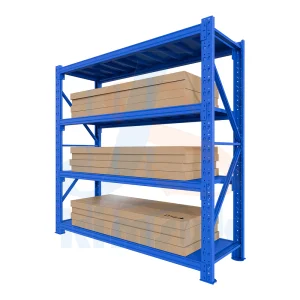
China Best Freestanding Racks Manufacturers & Exporter

Global Authority in High-Performance Industrial Storage Systems, Modular Pallet Racking, and Seismic-Compliant Warehousing Infrastructure

14+
Years Manufacturing Experience
18,500㎡
State-of-the-Art Factory Floor
$12M+
Annual Global Export Value
850+
Supply Chain Global Partners

1. Global Enterprise Procurement Trends in Modern Warehousing

In the era of rapid e-commerce expansion and localized distribution networks, global enterprises are facing unprecedented pressure to maximize space utility while ensuring safe, agile material handling operations. High-density, freestanding racking systems have transitioned from passive storage components to active, high-yield assets within global supply chain architectures. Sourcing heavy-duty steel shelving requires deep due diligence concerning metallurgy, structural load testing, seismic calculations, and international safety compliance.

Key Market Drivers Shaping Procurement:
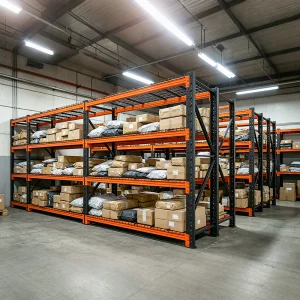
  • Optimizing Vertical Density: Rising land acquisitions and logistics warehouse lease premiums force industrial players to deploy tall, freestanding racks capable of maintaining structure without requiring ceiling bracing or excessive wall anchors.
  • Rapid Deployment and Modularity: Businesses favor boltless, adjustable pallet systems that can adapt to changing stock dimensions without invoking specialized tools or site remodeling.
  • Regulatory Auditing and Liability Mitigation: Compliance with local structural codes (like RMI standards in the USA, FEM guidelines in Europe, and AS4084 in Australia) is no longer optional. Enterprises actively seek manufacturers providing full seismic calculations and verified structural performance certifications.

Shenzhen Kimsuk Storage Equipment Manufacturing Co., Ltd., since its establishment in 2016, has engineered heavy-duty freestanding rack architectures that resolve these procurement challenges. Backed by 14 years of industrial experience, Kimsuk supports supply chain operations across North America, Europe, Australia, and South America with structures designed to survive high-throughput distribution dynamics.

Macro-Level Industrial Storage Solutions

Tailored system configurations engineered for diverse industrial sectors, from e-commerce fulfillment hubs to heavy manufacturing sites.

E-Commerce & 3PL Hubs

High-turnover selective pallet racks optimized for automated guided vehicles (AGVs) and standard forklifts. Engineered with quick-adjust beams and robust column protectors to support continuous picker access.

Cold Chain & Deep Storage

Drive-in and push-back rack systems using premium Q345B steel alloys that preserve high tensile strength and yield integrity in sub-zero environments, maximizing thermal energy efficiency.

Heavy Manufacturing & Industrial

Cantilever and heavy-duty steel shelves designed to carry structural steel tubes, automotive component dies, and raw sheet metal loads up to 5,000kg per bay without structural deflection.

Precision Manufacturing Workflow & Industrial Hardware

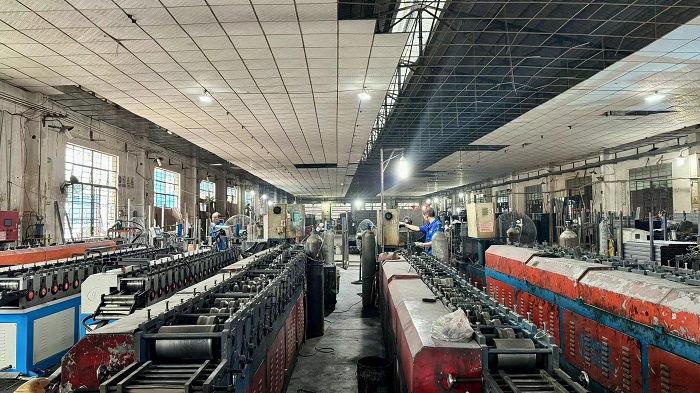
Our vertical production integration at the Shenzhen plant guarantees full traceability from raw material metallurgy to the final powder-coated finish.
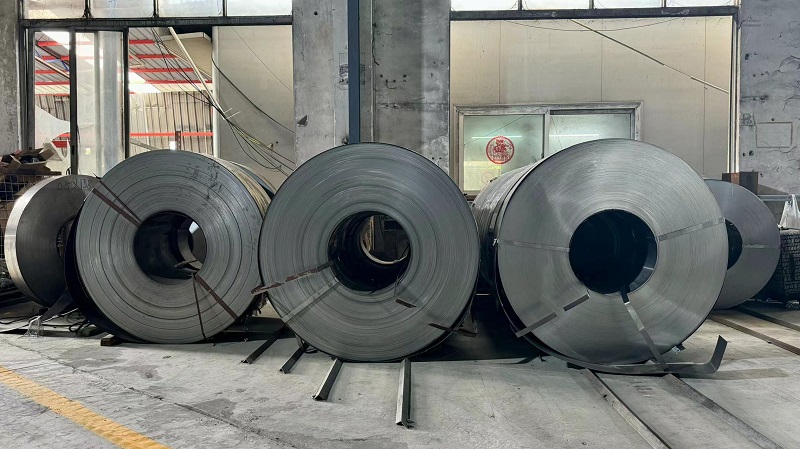
Raw Materials
Raw Materials
Stamping Molding
Stamping Molding
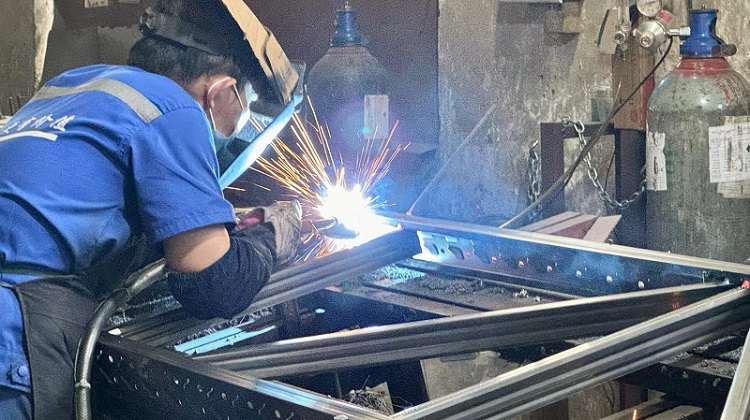
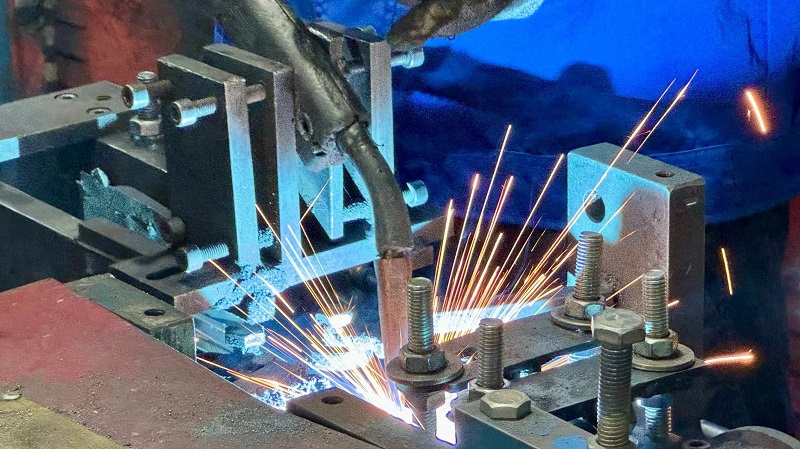
Welding
Welding
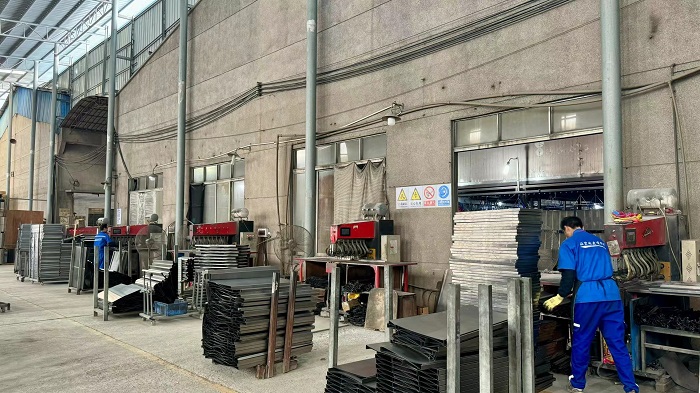
Punching
Punching
Painting
Painting
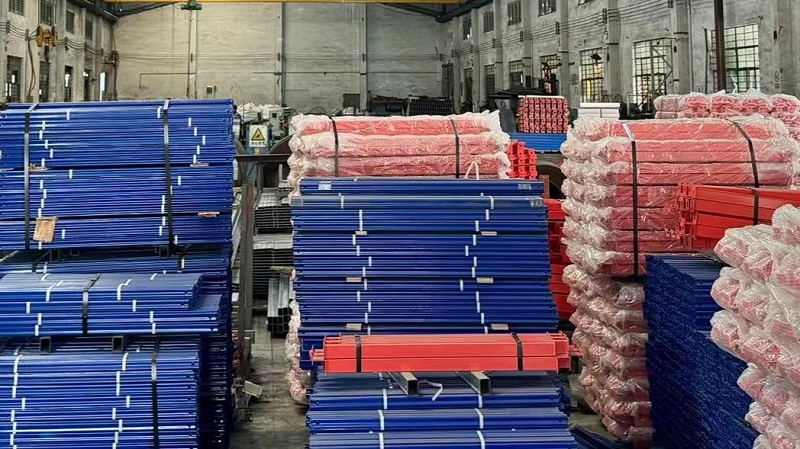
Packaging
Packaging
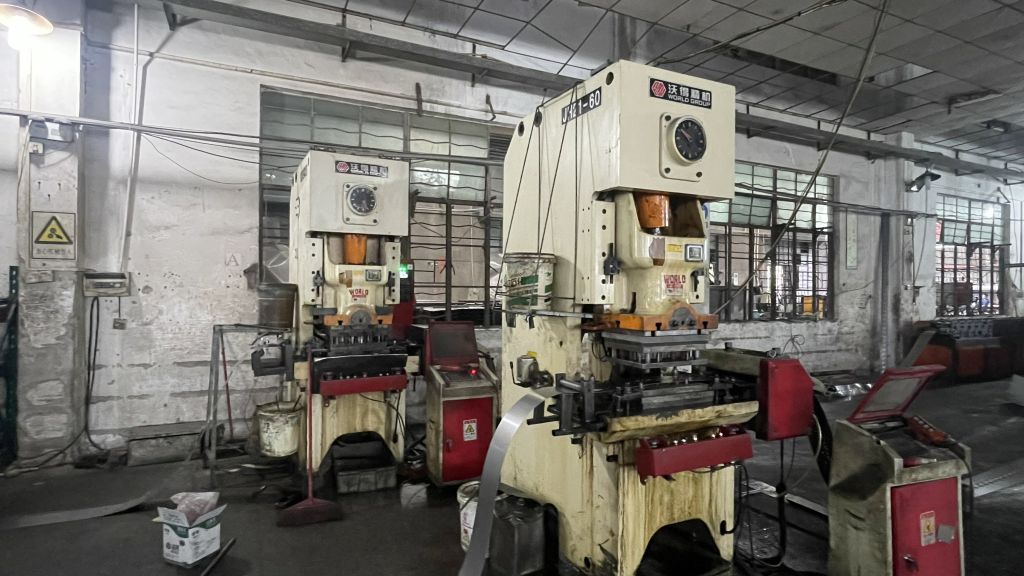
Stamping Molding Machine
Piercer Machine
Piercer Machine
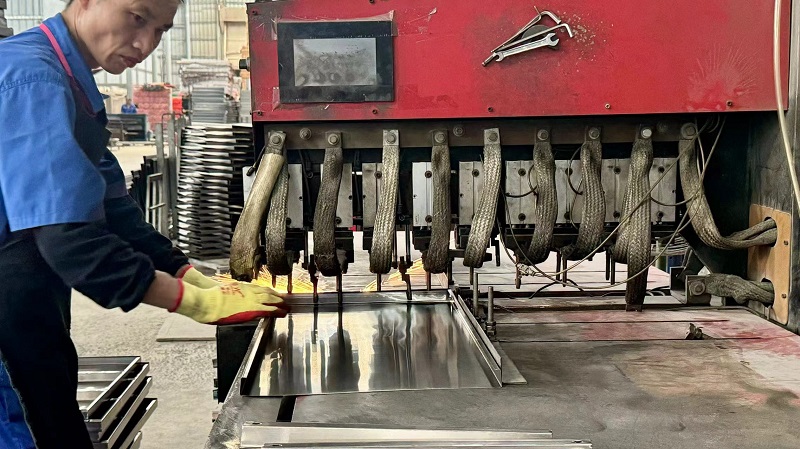
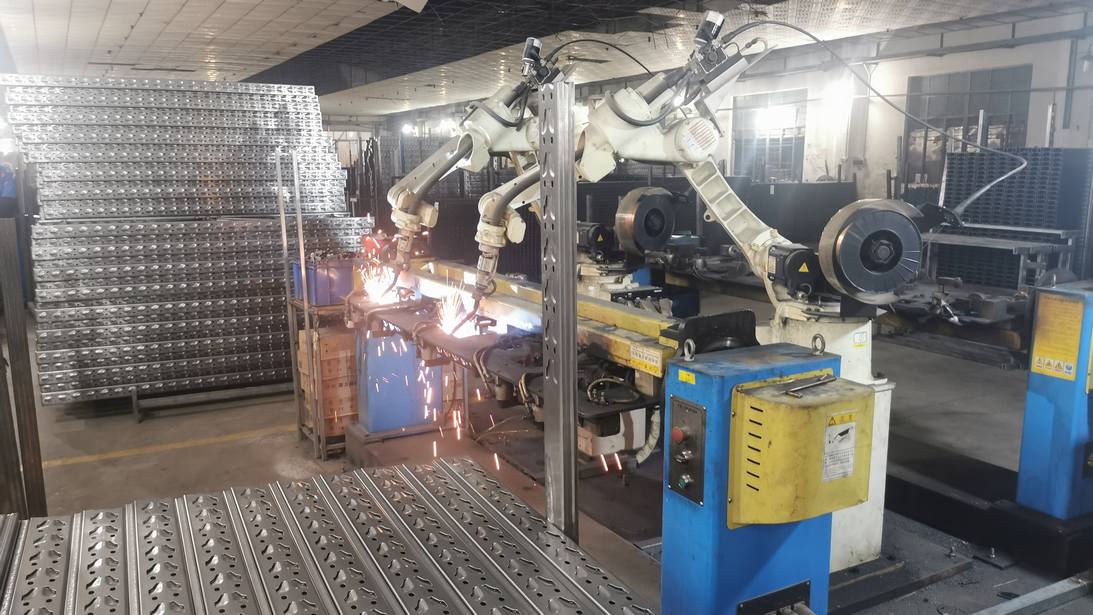
Welding Machine
Welding Machine
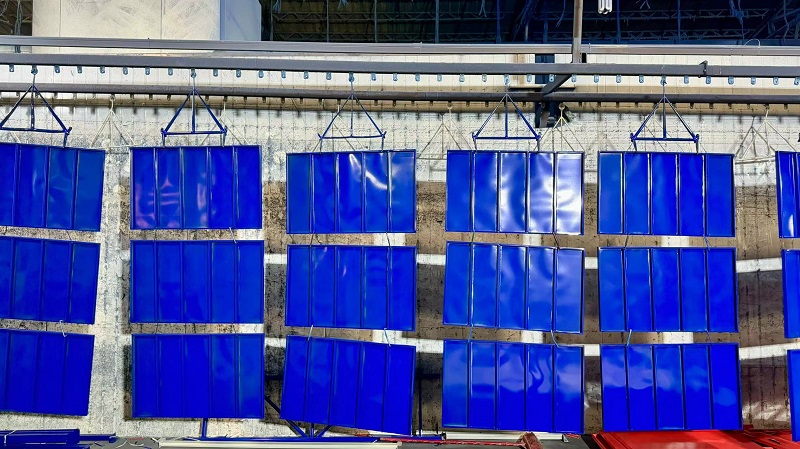
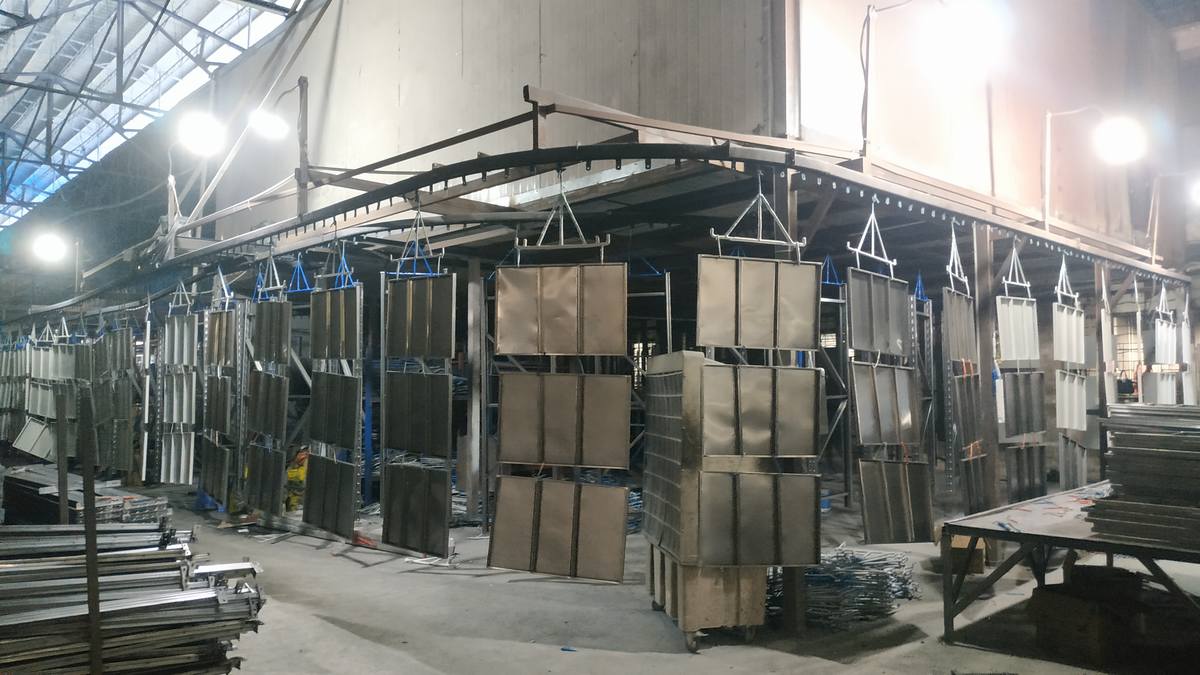
Painting Line
Painting Line
Punching machine
Punching machine
Design process for pallet racks

2. Engineering & Structural Integrity: The Technical Roadmap

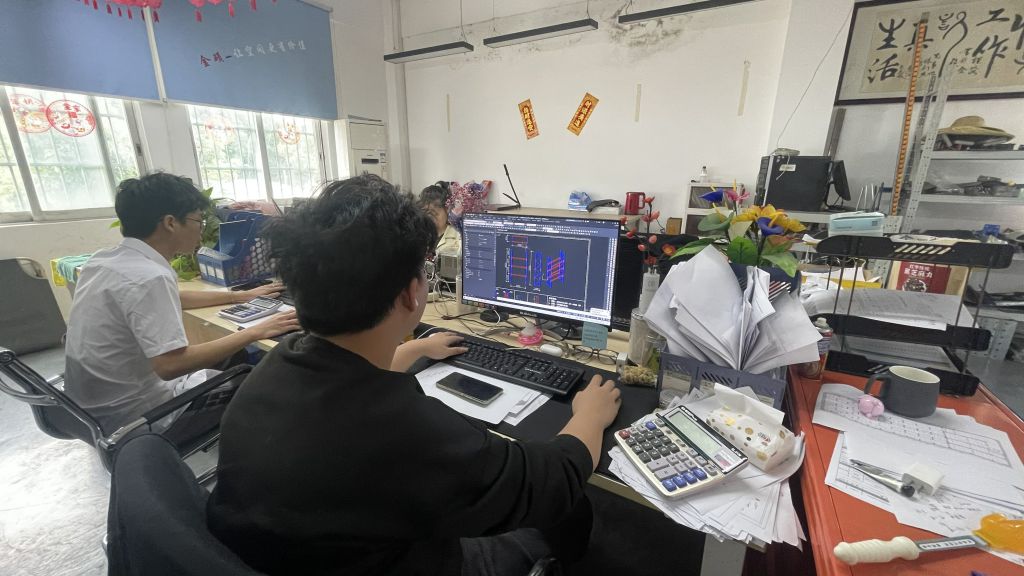
A racking system is a structural project subjected to static, dynamic, and seismic forces. The design and manufacturing processes must prioritize structural safety. The R&D department at Shenzhen Kimsuk, staffed by 18 professional design engineers, builds racking systems on three foundational pillars:

Advanced Metallurgy and Section Optimization

We source cold-rolled steel coils from top steel mills, selecting certified Q235B and Q345B grades. Using finite element analysis (FEA), we calculate dynamic stress models on uprites and beams. By adjusting the cross-section design, adding stiffening ribs, and using multi-point connection claws, our upright profiles offer high load capacity per unit weight, helping to lower shipping costs.

Robotized MIG/CO2 Shielded Welding

To reduce human fatigue errors, beam end connectors and base plates are welded using automated robotic welding units. This ensures uniform penetration depth, eliminates localized porosity, and mitigates weld cracking hazards under heavy cyclical loads.

Advanced Electrostatic Thermosetting Coating

Every racking component undergoes a 7-stage chemical pre-treatment process—including degreasing, rust removal, acid pickling, and phosphating—before entering our automatic powder coating line. The electrostatic powder is baked at 180°C to 200°C, producing a dense surface layer resistant to impact, scratching, and chemical corrosion.

Key Quality Evaluation Framework at Kimsuk:
  • Laser Measurement Calibration: Checks dimension accuracy within ±0.5mm across spans.
  • Hydraulic Deflection Load Testing: Tests beams up to 1.5 times nominal limit loads to verify safety margins.
  • DFT Gauges (Dry Film Thickness): Measures paint thickness to ensure a consistent, protective layer.
  • Weld NDT (Non-Destructive Testing): Periodically monitors structural weld integrity.

3. Industrial Status & Supply Chain Capabilities

With an annual export volume reaching $12 million, Shenzhen Kimsuk Storage Equipment Manufacturing Co., Ltd. serves logistics hubs, chemical plants, automated warehouses, and industrial suppliers worldwide. Our 18,500㎡ facility is optimized for volume manufacturing, managing large projects smoothly through a network of over 850 verified supply chain partners.

Our supply chain model helps maintain pricing stability despite global market fluctuations. By securing raw materials through forward contracts and utilizing automated production equipment, we offer short lead times. We work directly with global freight forwarders to optimize shipping logistics—efficiently nesting uprights and crossbeams to maximize container space and reduce transport costs for our clients.

Compliance and Regional Certification Standards

We recognize that structural safety standards vary by region. Kimsuk products are engineered to align with major international codes:

  • European Standards (CEN/FEM): Engineered in compliance with EN 15512 and FEM 10.2.02, ensuring uniform safety margins across EU jurisdictions.
  • North American Standards (RMI): Conforms with the Rack Manufacturers Institute specifications, focusing on load capacity labeling and collision protection designs.
  • Australian Standards (AS4084): Designed to meet the requirements for steel storage racking safety and design inspection in Oceania.

Frequently Asked Questions (FAQ)

Direct answers to technical queries, installation requirements, and compliance parameters for industrial freestanding racks.

Q1: What defines a rack as "freestanding", and when is floor anchoring required?
A freestanding rack is a self-supporting structural unit that maintains its vertical alignment under nominal load without requiring attachment to the building's walls or ceiling structures. However, for safety and compliance with international standards (such as EN 15512 or RMI), racking systems must be anchored to a concrete floor slab using expansion or chemical anchors. Floor anchoring secures the baseplates against accidental collisions by forklifts or shift loads caused by seismic events.
Q2: How do Q235B and Q345B steel grades differ in rack manufacturing?
Q235B (yield strength of 235 MPa) and Q345B (yield strength of 345 MPa) are structural carbon steels widely used in industrial fabrication. Q345B, a low-alloy, high-tensile steel, is selected for high-load upright frames and structural beams where safety margins require higher resistance to deformation. Q235B is commonly used for standard light-to-medium racking frames and shelf decking. Utilizing Q345B allows manufacturers to reduce overall metal mass while maintaining load ratings.
Q3: How do you verify load capacities for customized industrial racks?
We verify capacity ratings using structural calculations based on finite element analysis (FEA) alongside physical load testing. In physical tests, hydraulic actuators apply forces up to 1.5 times the nominal load rating to measure deflection rates. The standard safety deflection limit for beams under load is L/200 (span length divided by 200). We provide complete load application charts and structural calculation reports with our custom racking projects.
Q4: What rust prevention treatments are applied for humid or cold-storage environments?
For humid or cold-storage installations, we offer two main rust-prevention systems: hot-dip galvanization and specialized epoxy powder coatings. Hot-dip galvanization coats the steel with a sacrificial zinc layer inside and out, making it suitable for wet or sub-zero environments. For standard dry environments, our 7-stage chemical pre-treatment and electrostatic powder coat offer robust rust resistance under normal operating conditions.
Q5: How does Shenzhen Kimsuk handle global transport and on-site assembly support?
We optimize transport packing by nesting components to maximize shipping container space and prevent shift damage. Each shipment includes detailed installation manuals, 3D assembly layouts, and component labels. For major installations, our engineering team provides remote video supervision and coordinates with local partners to assist local contractors with assembly and load inspections.