Explore our core collection of robust racking units optimized for load reliability, safety, and operational excellence.


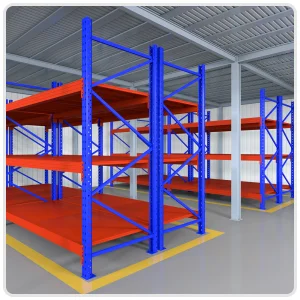
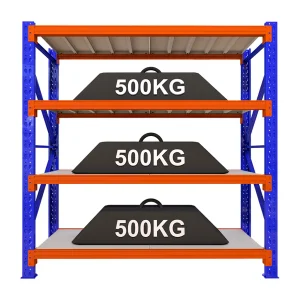


Meeting the demands of cross-border supply chains, hyper-scale e-commerce fulfillment, and automated smart hubs.
The modern logistics and manufacturing landscapes demand dynamic footprint optimization. Driven by global e-commerce development, third-party logistics (3PL) integration, and land scarcity, warehouse administrators are forced to look upward. Vertical storage systems are no longer passive ironmongery; they are fundamental operational assets.
At Shenzhen Kimsuk Storage Equipment Manufacturing Co., Ltd., we understand that structural structural safety, compatibility with high-density automated recovery machines (ASRS), and load distribution ratings are critical parameters for modern industrial facilities. As global logistics networks undergo massive shifts, our solutions bridge the gap between heavy structural demands and high spatial efficiency.
Rapid urbanization and the prioritization of localized inventory nodes require warehouses to sustain massive volume throughput. Structural designs must endure both intensive cycle operations and potential geological dynamic loading stresses.
Over 14 years of design and manufacturing excellence, delivering structural integrity worldwide.
Established in 2016 and based in Shenzhen, Shenzhen Kimsuk Storage Equipment Manufacturing Co., Ltd. specializes in the design, manufacturing, and global supply of high-grade warehouse storage infrastructure. We bridge localized supply chain dynamics with international safety compliance, ensuring robust solutions for warehouses, factories, logistics platforms, and industrial developers worldwide.
With an active engineering pipeline supported by 18 R&D engineers and 45 specialized quality inspectors, we oversee every square millimeter of structural cold-formed steel profiles we fabricate. We design robust rack systems tailored for heavy industrial loads, maintaining tight dimensional control through structural calculations, finite element analysis (FEA), and strict compliance procedures.
Why manufacturing with Shenzhen Kimsuk in the Greater Bay Area maximizes value and reliability.
By leveraging close commercial ties with China's premier raw steel suppliers, we secure certified Q235B and Q355B structural steel at stable pricing, ensuring consistent quality even amid volatile market conditions.
Our facility relies on automated continuous roll-forming lines, computerized punching setups, and robotic welding stations to ensure high repeatability and tight engineering tolerances across major production runs.
Situated in the Shenzhen industrial zone, our logistics reach extends to both Shenzhen and Hong Kong deep-water ports. This connectivity ensures direct, timely shipping routes to global regions.
Every step—from raw coil slit processing to final component packaging—is monitored by our 45-person QC inspection team.
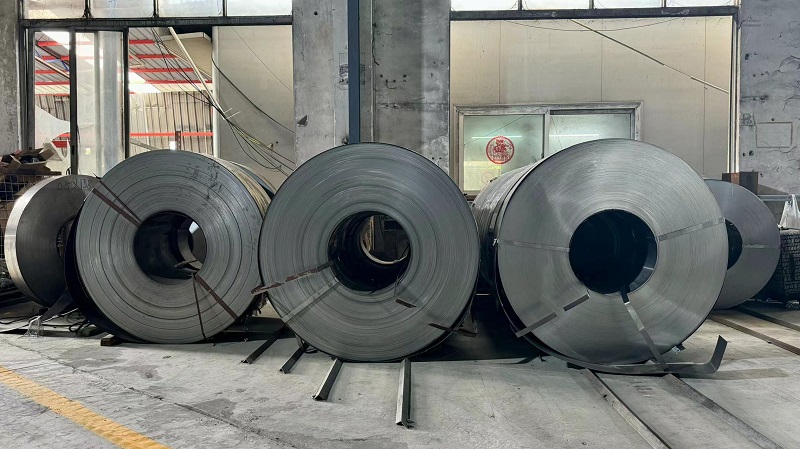
We audit chemical compositions and test yield strengths of incoming structural steel coils to ensure compliance with material specifications.
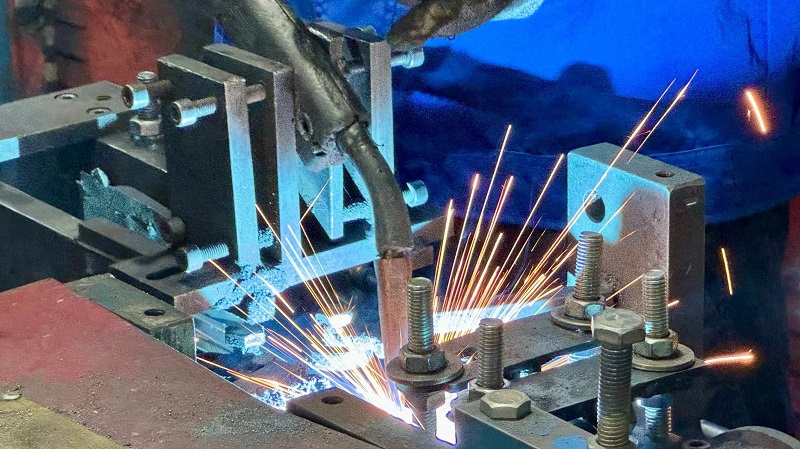
Precision cold-forming dies shape structural elements, minimizing residual stress and maintaining straight profile segments.
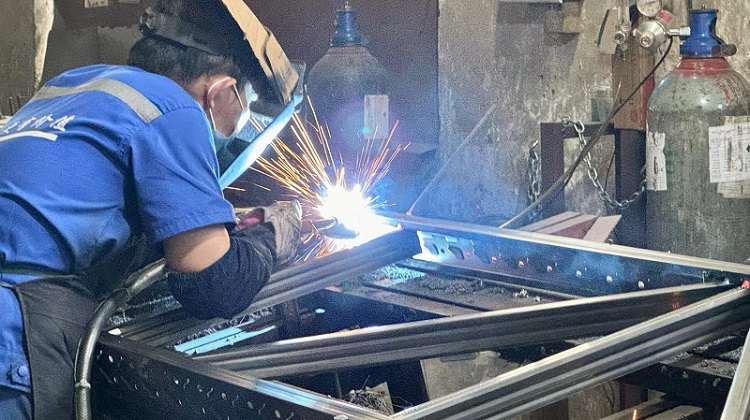
Certified welders and automated robotic cells run deep-penetration fillet welds on connector brackets and base plates.
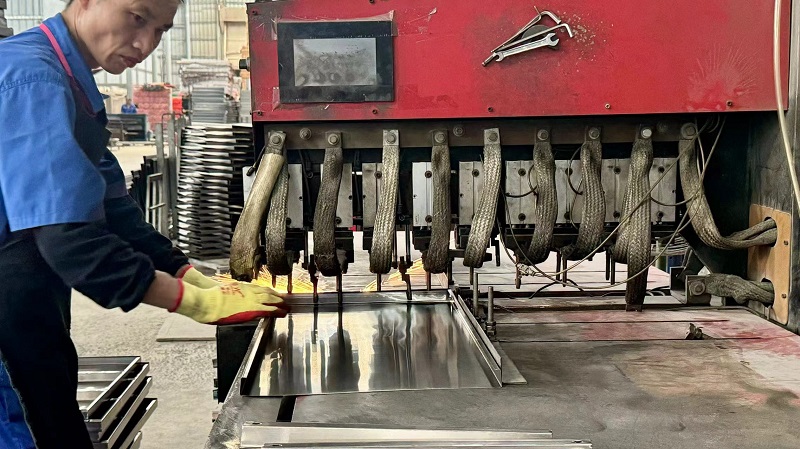
CNC punching machines punch accurate pitch patterns into upright columns, facilitating adjustments during setup.
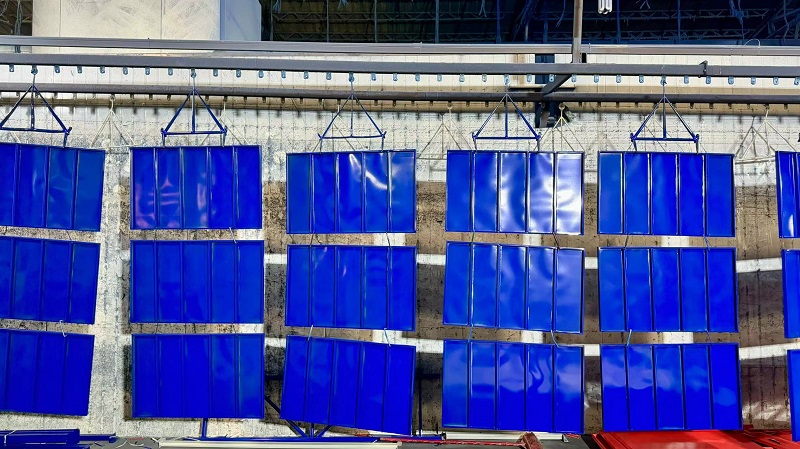
Multi-stage pre-treatments followed by electrostatic powder deposition and curing generate a durable, corrosion-resistant exterior.
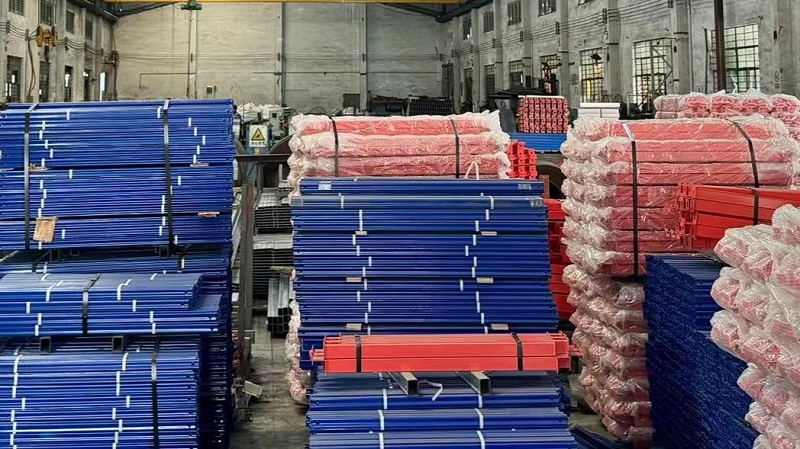
Components are bundled using protective foam layering, steel strapping, and moisture-resistant shrink wraps to ensure safe transit.
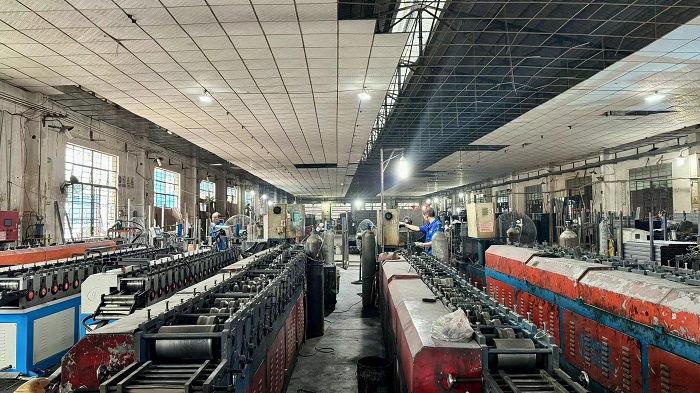
High-tonnage stamping equipment manufactures rigid connector components and base plate supports with minimal dimensional deviation.
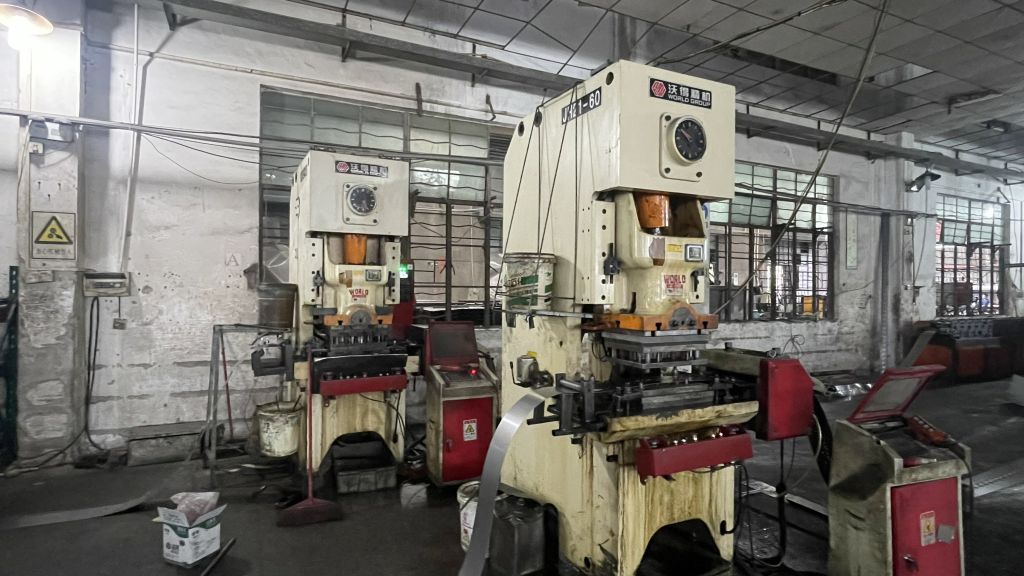
High-precision punching lines perform inline structural perforation on heavy-gauge steel, maintaining accurate alignment over long runs.
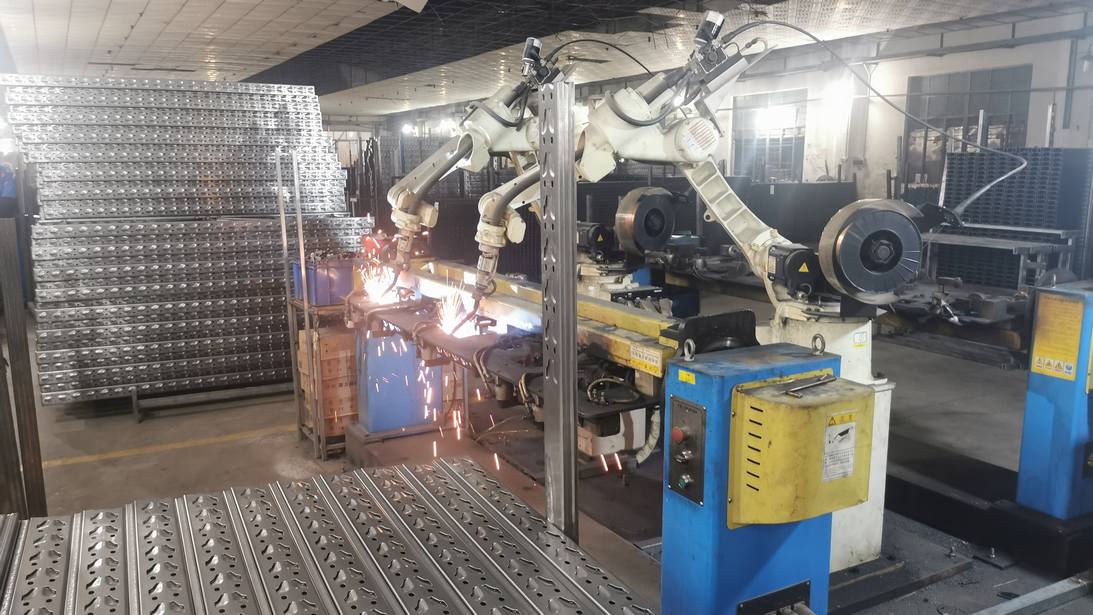
Robotic MIG welding stations perform consistent, repeatable weld arcs to prevent thermal distortion and ensure structural strength.
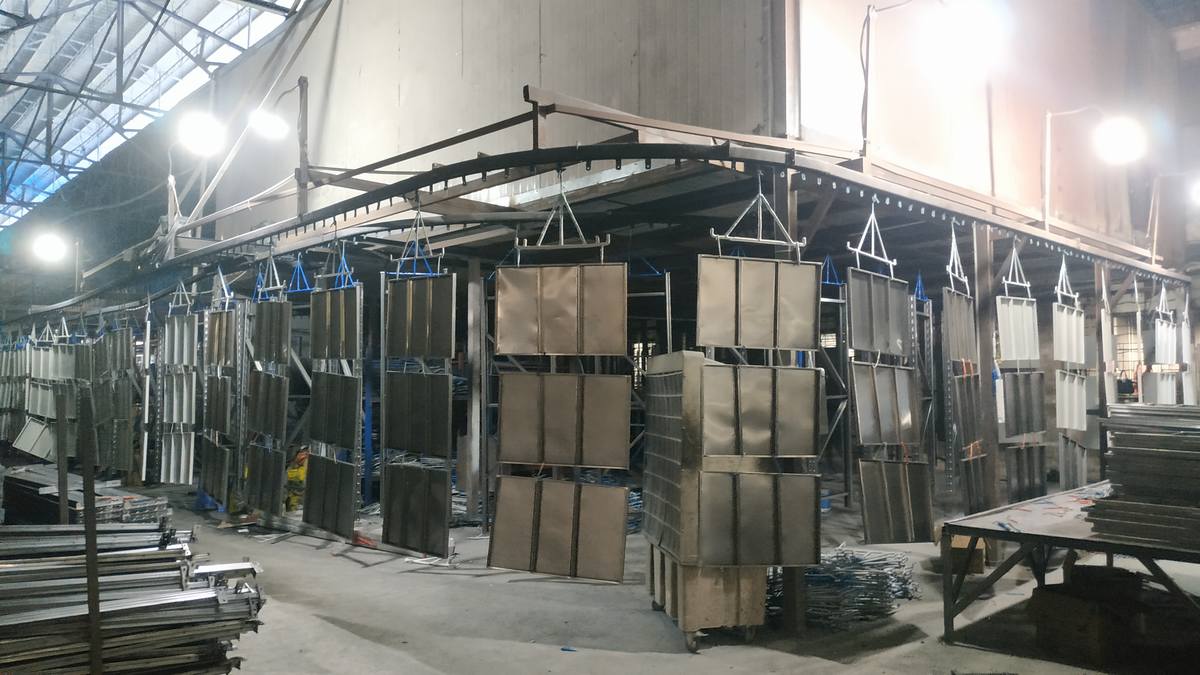
Our continuous conveyor ovens cure polymer powder coatings evenly, helping the steel resist standard industrial wear.
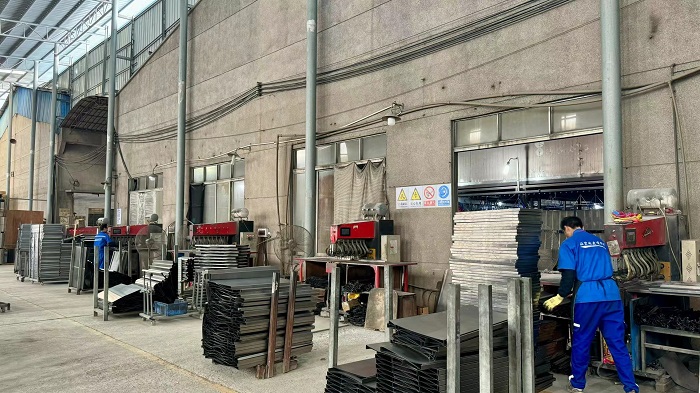
Our computer-controlled machinery produces clean, accurate punch profiles to ensure simple, reliable alignment during field assembly.
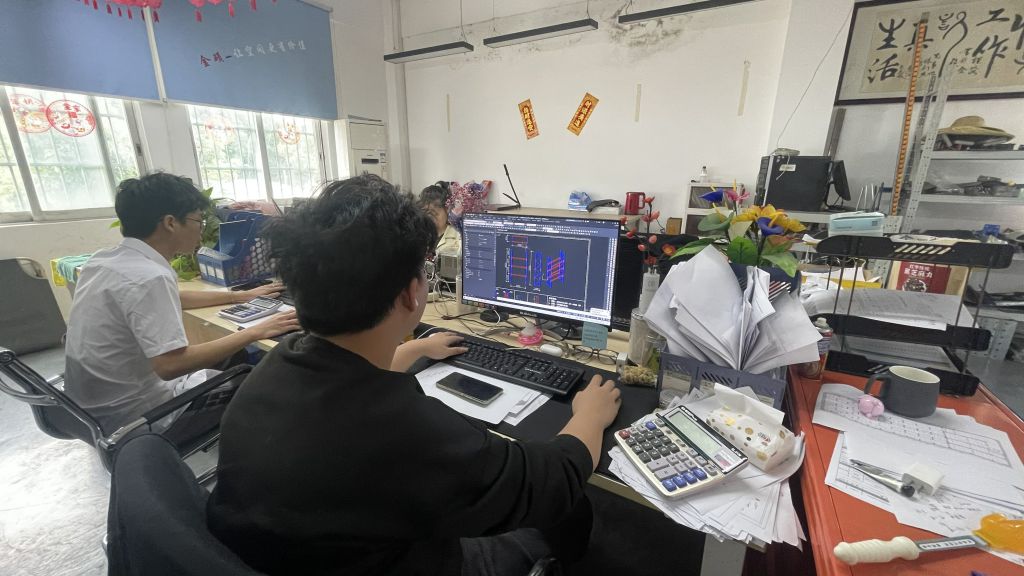
Our design engineers construct structural models, optimizing steel distribution to prevent localized buckling under load.
The technological path of industrial logistics systems toward automation, dynamic stress balancing, and green manufacturing.
Integrating structural calculations that account for regional earth acceleration factors. We utilize advanced calculations to determine minimum post thickness and frame configurations to survive dynamic stresses.
Refining tolerances to ensure upright designs are compatible with automated stacker cranes, laser-guided shuttles, and robotic retrieval units that require sub-millimeter positioning accuracy.
Transitioning production designs toward high-strength micro-alloy steel grades. This optimizes material volume and reduces carbon footprint while maintaining load capacities.
Collaborating with automation developers to test sensor integrations on beam connectors, designed to alert warehouse managers of potential structural overload conditions.
Adapting steel configurations to satisfy regional warehouse layouts and building code requirements.
| Target Region | Predominant Standard | Typical Racking Profile Choice | Safety Factor Requirements | Environmental Concerns Handled |
|---|---|---|---|---|
| North America | RMI (ANSI MH16.1), AISI Specification | Teardrop Step Beam Pallet Racks, Bolted Frame Shelving | 1.94 LRFD / 1.67 ASD design criteria | High seismic zone considerations (e.g. West Coast US) |
| Europe | EN 15512, EN 15620, FEM Standards | Adjustable Pallet Racks (APR), Multi-Tier Mezzanines | Limit State Design partial safety factors | Strict floor deviation checks and Eurocode 3 compliance |
| Australia & NZ | AS 4084-2012 / AS 4084.1:2023 | Heavy Selective Systems with specific connector locks | Rigorous load-plate labeling and load testing | Wind loading for outdoor cantilever and high seismic loads |
| Southeast Asia | Standard ISO / Localized Industrial Codes | Double-Deep Systems, Drive-in Racks, Multi-tier Platform | 1.5 to 2.0 safety ratios depending on application | High humidity corrosion protection (anti-rust powder prep) |
By integrating heavy-load steel platforms, our structural mezzanines help double the active floor space of existing footprints without requiring expensive masonry modifications.
Offering direct access to every pallet unit, this system fits versatile SKU inventories and facilitates high-cycle order fulfillment.
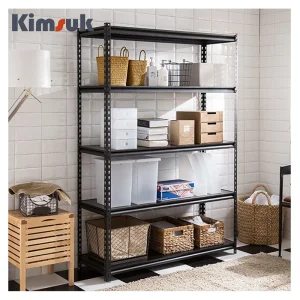
Perfect for manual order picking, garage storage, retail inventory rooms, and kitchen organization, providing simple assembly and modular adjustability.
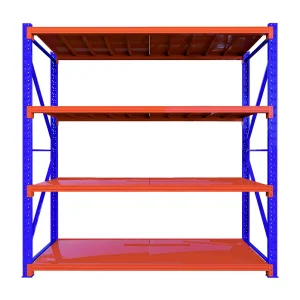
Heavy-load warehouse systems built to optimize vertical space and secure bulk inventory.

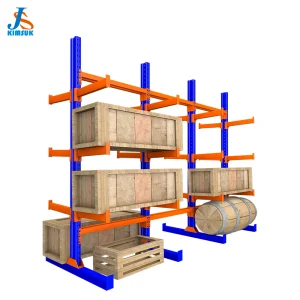

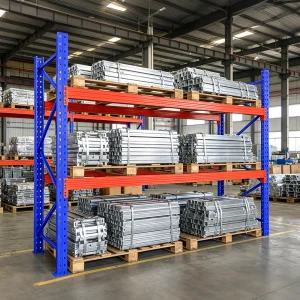

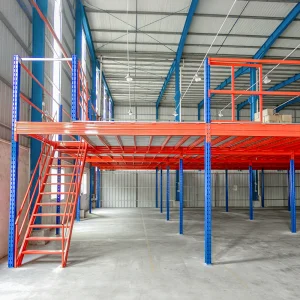
Technical answers to key planning, safety, and logistical questions.
Our default profiles are shaped from certified Q235B and Q355B structural steel. Q355B is utilized for high-load columns and beams where higher yield strength is required, whereas Q235B is optimal for standard duty shelving and load support brackets. Mill test certificates (MTC) can be supplied with each production shipment upon request.
We calculate maximum load limits using finite element analysis (FEA) software. Our structural designs are engineered based on localized standards (such as RMI in the US and EN 15512 in Europe). Calculations analyze deflection under static loads, dynamic forces from loading cycles, and localized wind or seismic stresses where applicable.
Our raw profiles undergo an automated multi-stage wash process—including acid cleaning, phosphate treatment, and pure water rinses—before powder deposition. We electrostatically apply a thermosetting epoxy-polyester powder coat, curing it at 180°C to 200°C to achieve a durable finish that resists scratching, impact, and peeling.
Yes. Our engineering department specializes in custom industrial designs. We tailor column dimensions, frame widths, beam lengths, loading ratings (ranging from 100 kg to over 5,000 kg per level), and spatial layouts to match your warehouse space, forklift types, and pallet configurations.
Our R&D team of 18 engineers provides design support. We generate detailed 2D CAD layouts and 3D product visualizations based on your warehouse measurements, pillar layout, forklift capabilities, and material workflows. This service helps ensure optimal space utilization and compliance before production begins.
Our 45-person quality control team performs multi-point inspections throughout the production cycle. This includes raw material verification, welding strength tests, powder coating thickness checks, dimensional tolerance checks, and physical load testing. We use laser tools, thickness gauges, and load-test rigs to ensure each batch meets international specifications.
 Kimsuk Storage